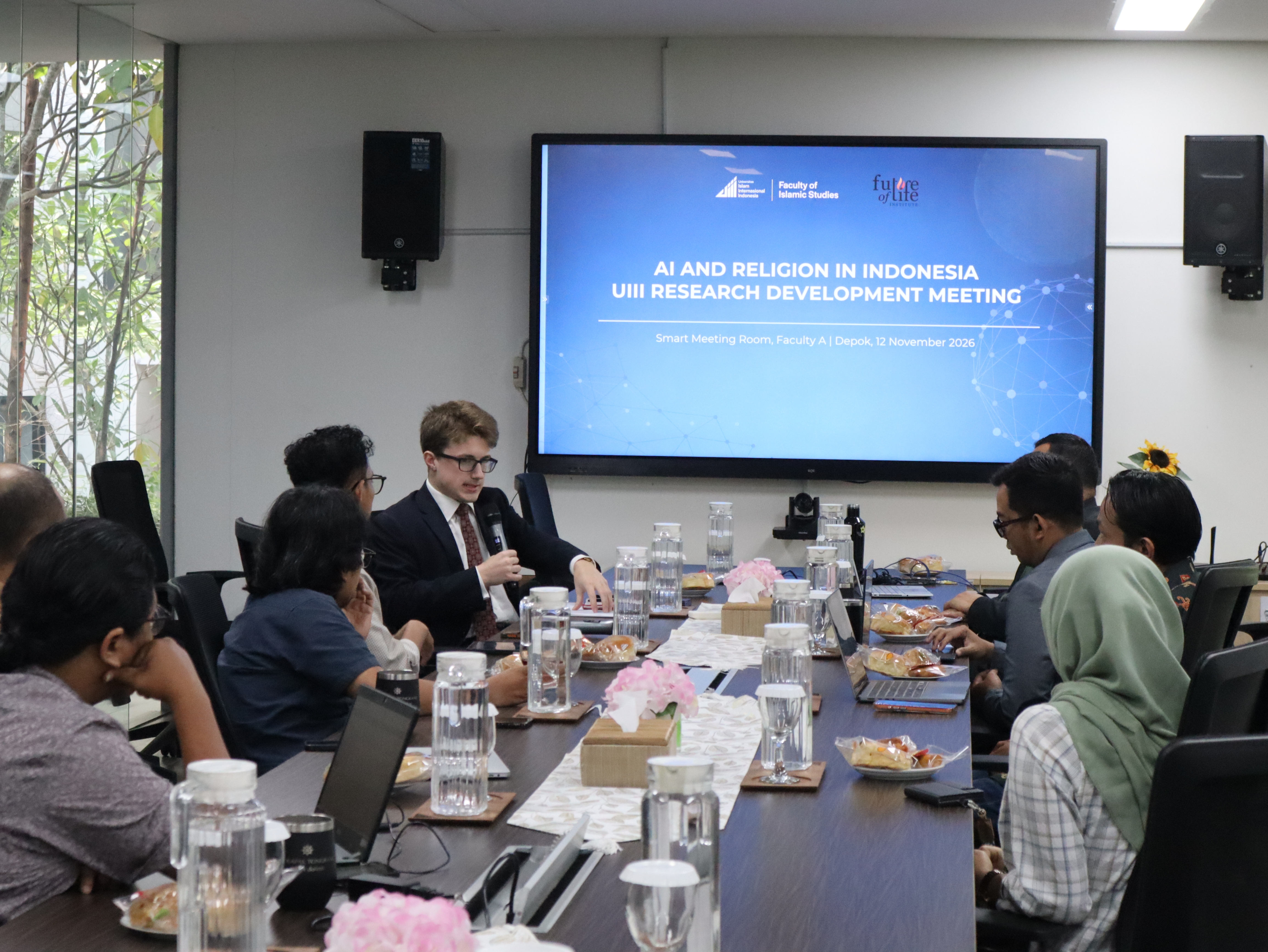
Depok – The Faculty of Islamic Studies (FIS), Universitas Islam Internasional Indonesia (UIII), held a research development meeting to discuss the growing relationship between artificial intelligence (AI) and religion, with a particular focus on Muslim communities and Islamic organizations in Indonesia. The meeting brought together William Jones, an associate of the Futures Program of the Future of Life Institute (FLI), FIS UIII academics, and researchers from various state Islamic universities in Indonesia to explore potential research collaboration and examine the implications of AI for religious life, knowledge production, and authority.
The meeting opened with remarks from the Dean of FIS UIII, Prof. Yanwar Pribadi, who expressed his appreciation to the participants for their attendance and contributions. He welcomed the opportunity to develop academic discussions and collaborative research on emerging technological developments and their implications for contemporary Islamic Studies and Muslim Communities.
William Jones delivered the first presentation as a future program associate at Future of Life Institute, an organization working to ensure that advanced technologies, particularly artificial intelligence, are developed safely and responsibly. He outlined FLI’s engagement with religious leaders, scholars, and communities across different regions, including Europe, the United States, India, Africa, and Latin America.
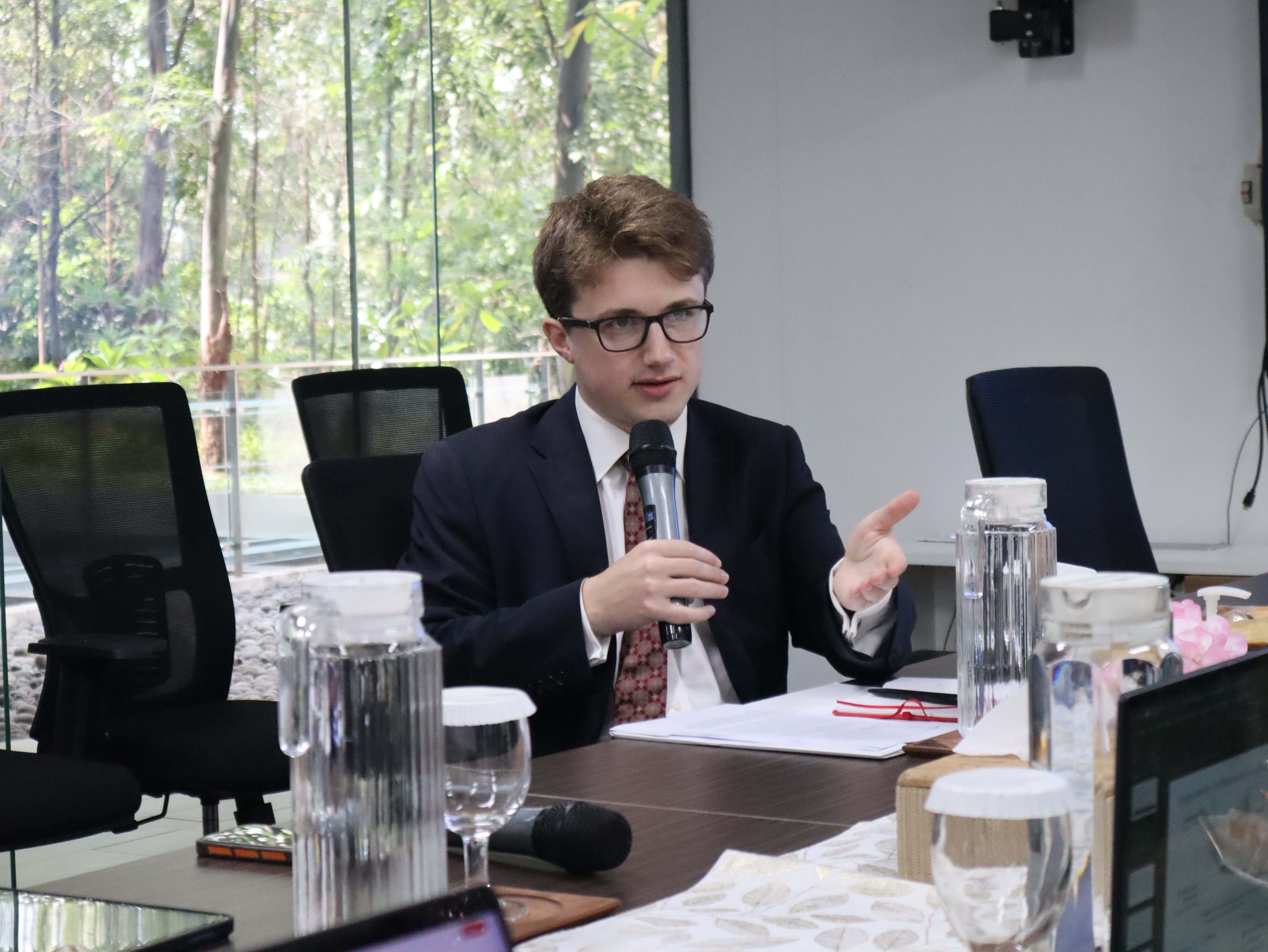
Jones emphasized that religious institutions and scholars should have an active role in shaping discussions on AI governance and ethics. Drawing on FLI’s international initiatives, he highlighted the importance of developing ethical principles and establishing appropriate boundaries for AI development and deployment. He also discussed the potential contributions of religious perspectives to broader conversations about human dignity, freedom, agency, and the preservation of religious values in an increasingly AI-driven world.
He further encouraged Indonesian religious institutions to engage with AI governance, noting that religious communities could contribute to a balanced approach that promotes technological innovation while ensuring safety, accountability, and respect for human and religious values.
The meeting continued with a presentation by Dr. Bhirawa Anoraga, who introduced the development of Digital Islam at FIS UIII. He explained that the initiative emerged from the growing need to understand how digital technologies are transforming Muslim societies and contemporary expressions of Islam.
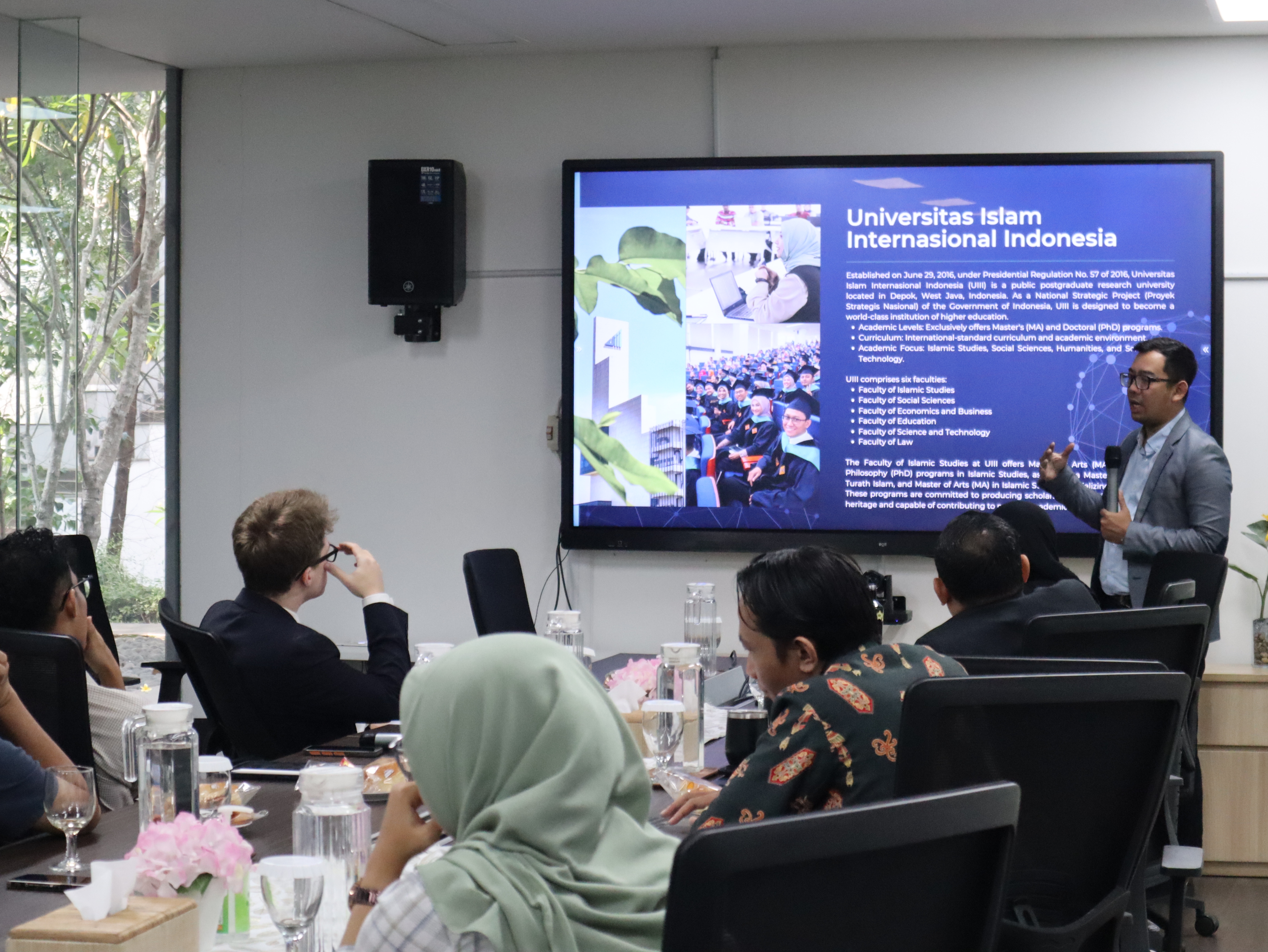
Digital Islam at FIS UIII seeks to advance interdisciplinary research on Islam and digital technologies while strengthening academic capacity in this emerging field. Its activities include developing research, hosting academic masterclasses, pursuing collaborative initiatives, publishing, and creating research resources for scholars and students.
Dr. Anoraga also highlighted the faculty’s efforts to integrate digital perspectives into its academic programmes, including the development of Digital Islam as a specialised area of study. Through this initiative, students are encouraged not only to understand technological developments but also to examine their ethical and social implications from the perspectives of Islamic studies and the humanities.
He further introduced two research directions being developed through the initiative. The first, supported by the Ministry of Religious Affairs, examines Muslim expressions on digital media and the internet, with the aim of developing a broader understanding of how Muslims engage with and express their religious views online. One of its intended outputs is a report mapping digital expressions of Islam in Indonesia.
The second research direction focuses on AI and religion, particularly how Islamic organizations understand and respond to artificial intelligence. This research seeks to develop an empirical perspective on AI ethics by examining the experiences, institutional positions, and responses of Muslim organizations in Indonesia.
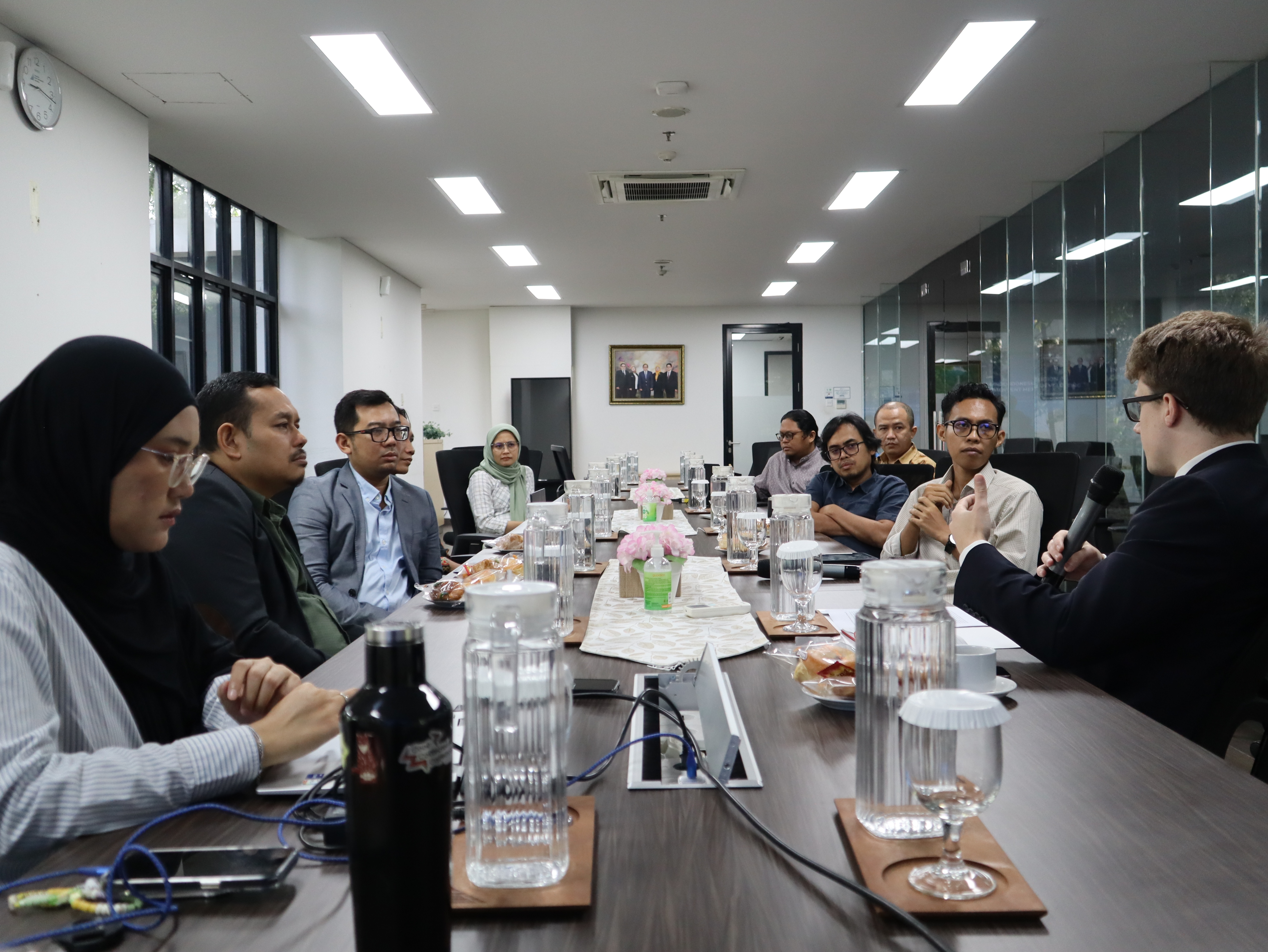
Discussing Moderate Islam and the Future of AI
The meeting also featured an interactive question-and-answer session that explored the relationship between AI, religious values, and the Indonesian understanding of Islamic Moderation (Islam Wasatiyyah).
The discussion highlighted the distinctive contributions of NU and Muhammadiyah in shaping Indonesian Islamic discourse. NU’s engagement with local traditions and cultural contexts, alongside Muhammadiyah’s reform-oriented approach, was discussed as part of the broader landscape of moderate Islam in Indonesia.
Participants also reflected on how Indonesia’s experience could contribute to international conversations on AI governance. The discussion raised questions about how religious communities can preserve their values and autonomy while engaging with technologies increasingly shaped by global technology companies.
The exchange further underscored the importance of bringing Islamic scholarship into contemporary debates on technological development, particularly concerning human agency, religious freedom, and the ethical boundaries of AI in education and everyday religious practices.
Through this meeting, FIS UIII reaffirmed its commitment to advancing research at the intersection of Islamic studies and contemporary technological developments. The proposed collaboration with the Future of Life Institute and the development of Digital Islam research offer opportunities to strengthen UIII’s contribution to international discussions on AI ethics, religious authority, and the future of Muslim societies.