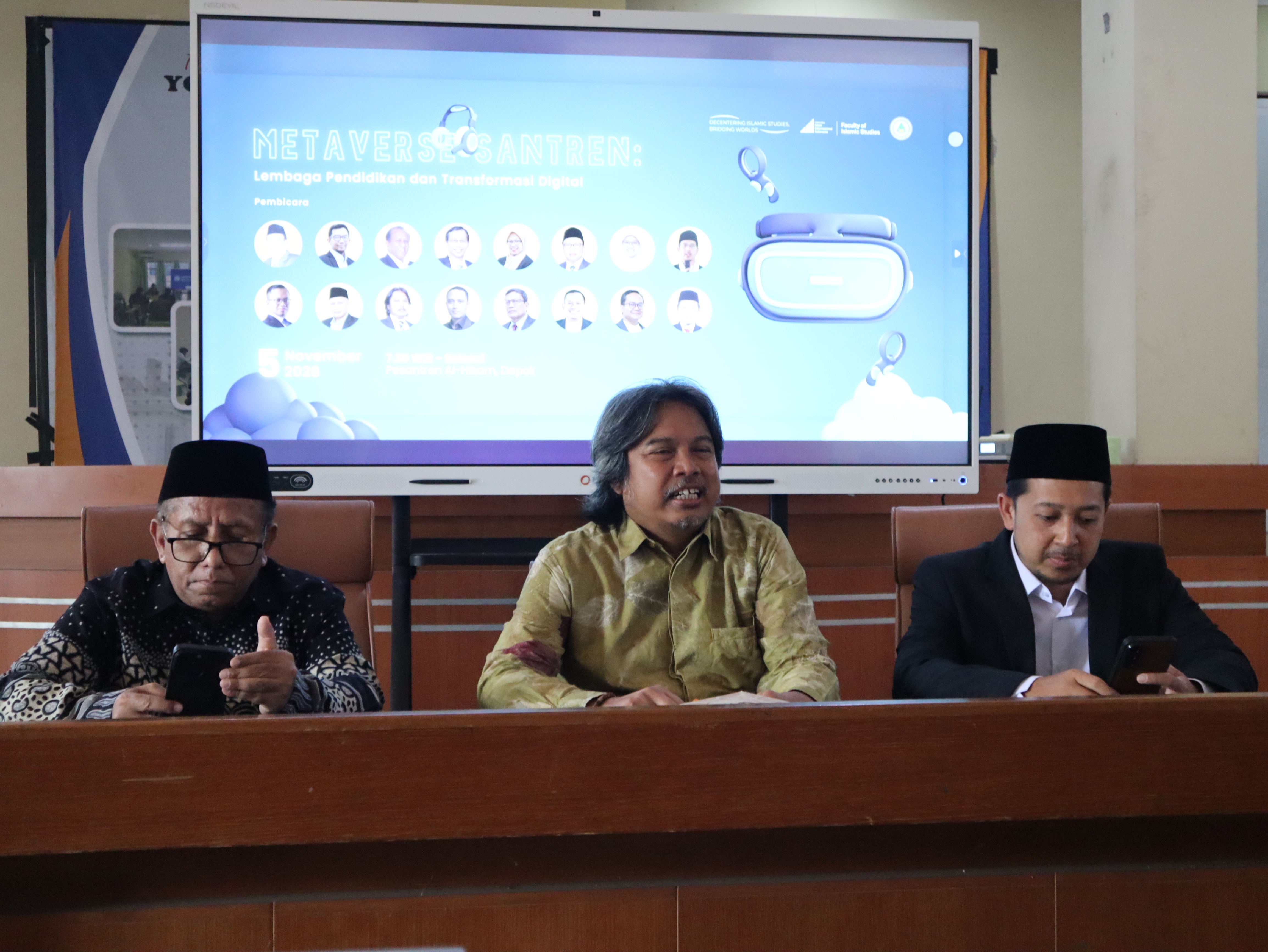
The Faculty of Islamic Studies (FIS) at Universitas Islam Internasional Indonesia (UIII) held a community engagement program on Thursday, November 5, 2026, at Pesantren Mahasiswa Al-Hikam Depok. Entitled “Metaverse-Santren: Educational Institutions and Digital Transformation,” the program brought together approximately 100 students from Sekolah Tinggi Kulliyatul Qur’an (STKQ) Al-Hikam Depok.
During the opening ceremony, representatives of both institutions expressed their appreciation for the community engagement initiative and highlighted the urgency of digital transformation in Pesantren. K.H. Muhammad Yusron Sidqi, M.Ag., Head of Pesantren Mahasiswa Al-Hikam Depok, referred to a fiqh maxim frequently cited by the late K.H. Hasyim Muzadi, founder of STKQ Al-Hikam Depok: “Lil-wasā’il ḥukm al-maqāṣid” (the means take the rulings of their intended ends). He explained that digital transformation serves two important purposes: first, as a means of addressing spiritual alienation; and second, as a tool for disseminating Islam as raḥmatan lil-‘ālamīn (a mercy to all creation).
Responding to this perspective, Dr. Chaider S. Bamualem, Secretary of the University, who represented UIII at the event, invoked another well-known Islamic maxim: “Al-muḥāfaẓah ‘alā al-qadīm al-ṣāliḥ wa al-akhdh bi al-jadīd al-aṣlaḥ” (preserving valuable traditions while embracing what is better and more beneficial from the new). He emphasized, “This principle captures the very relevance of the program: the need to find a balance between safeguarding intellectual and religious traditions and pursuing innovation. Digital transformation in Islamic educational institutions represents one possible way to bring these two commitments together.”
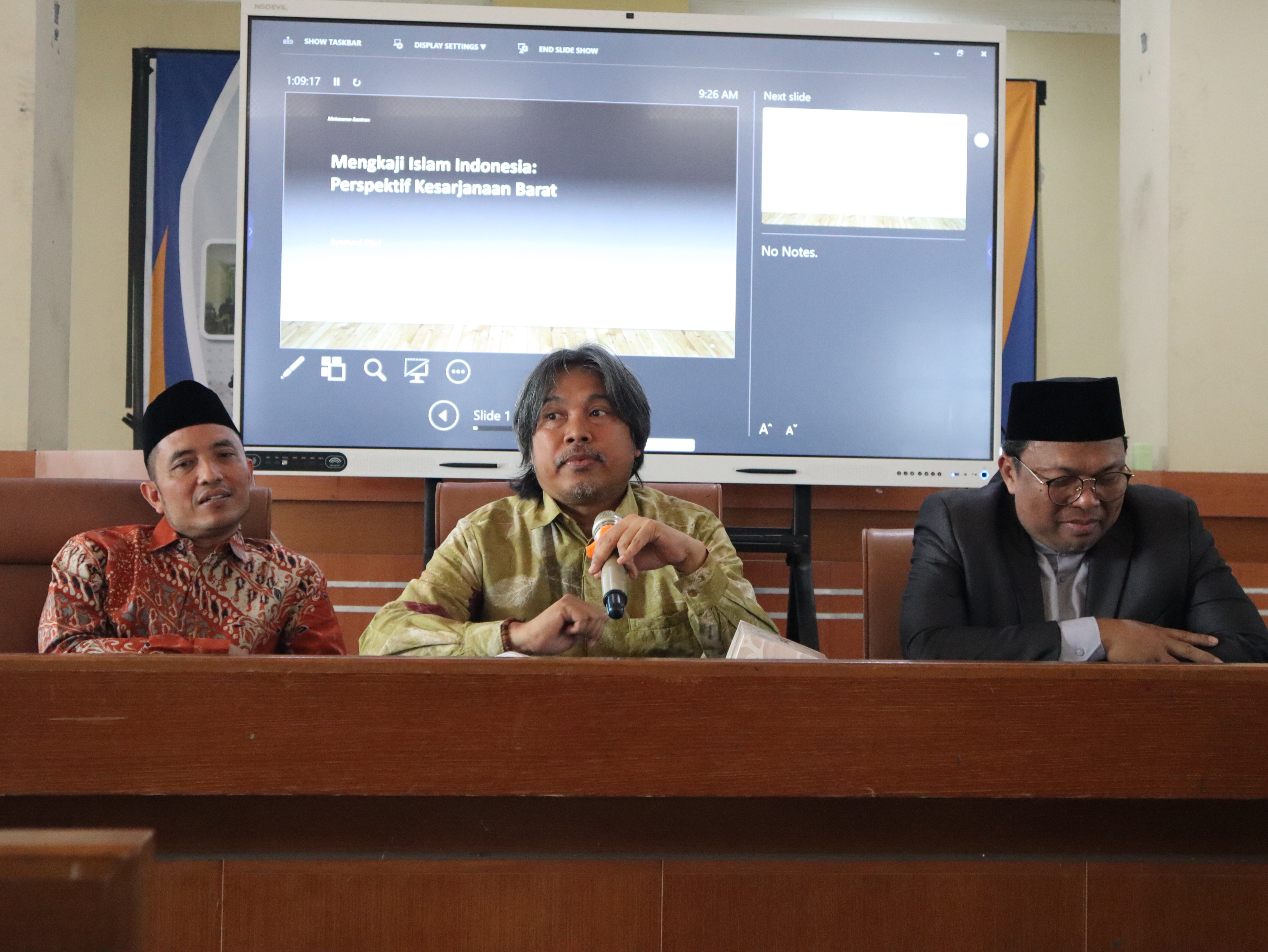
The program featured four panels addressing a range of intellectual and academic topics relevant to university students. The first session brought together Dr. Phil. Syafiq Hasyim, Dr. Ilyas Marwal, and Prof. Syamsul Rijal to discuss “Islam in Indonesia Today: Perspectives from the East and the West,” offering complementary insights into the study of Islam in Indonesia. The second session featured Dr. Bhirawa Anoraga and Dr. Haula Noor, who explored the challenges and potential of Digital Humanities in Islamic Studies, with particular attention to the ethical and theological considerations involved in integrating digital approaches into the field.
The third session focused on scholarly publication and research development, bringing together Dr. Torkis Lubis, Dr. Subur Wijaya, and Dr. Phil. Zacky Khairul Umam. Dr. Torkis Lubis explored the potential of turāth (classical Islamic scholarly heritage) in enriching and contextualizing contemporary Islamic studies. Meanwhile, Dr. Subur Wijaya discussed research clusters in Qur’anic Studies and Tafsir, highlighting potential areas of inquiry within STKQ Al-Hikam Depok. Dr. Phil. Zacky Khairul Umam further invited students to rethink Nusantara texts through a decolonial perspective, encouraging them to reconsider intellectual traditions and contributions that have often been overlooked or treated as peripheral in mainstream academic discourse.
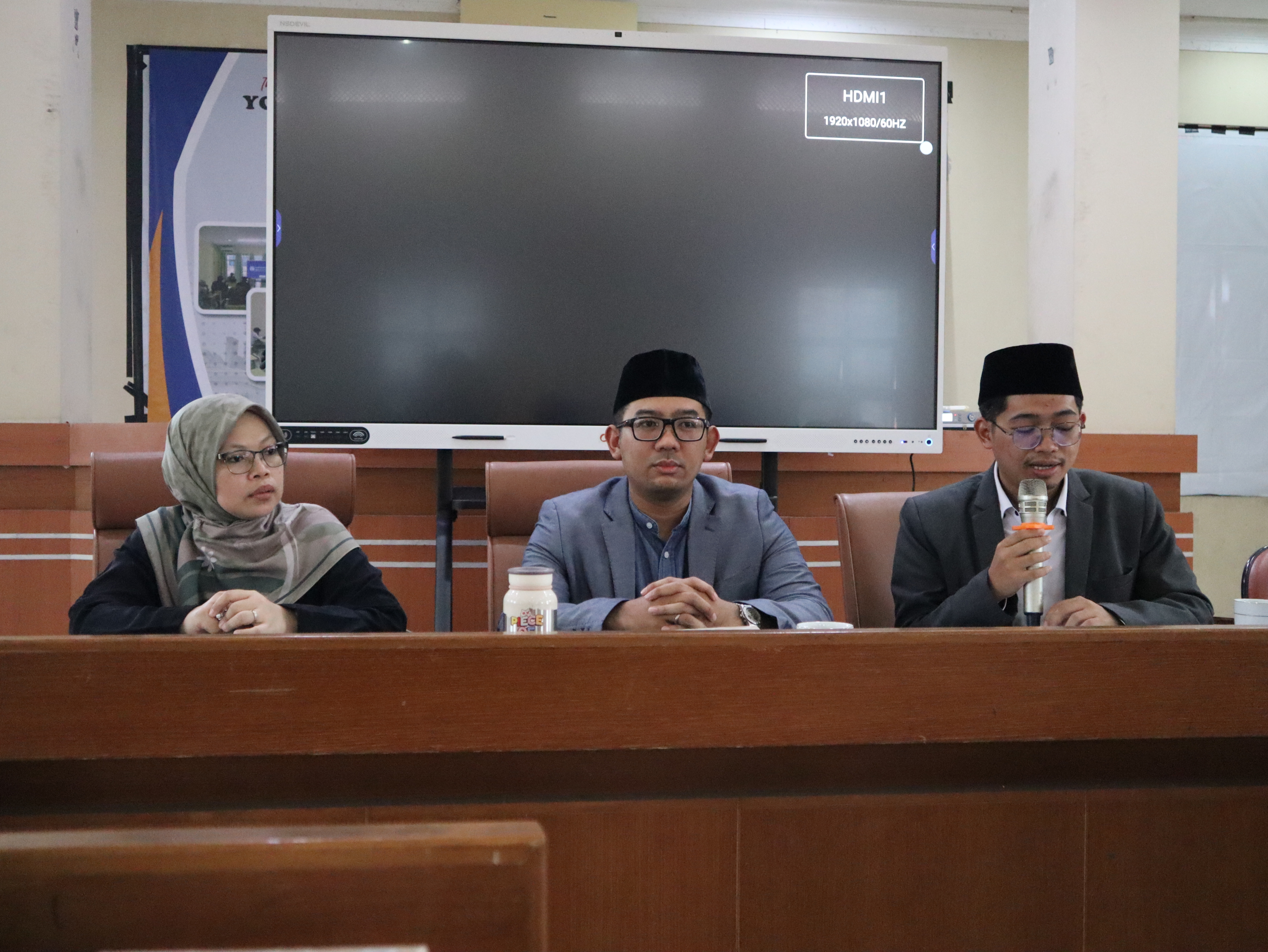
The panel discussions concluded with the fourth session, featuring Dr. Farid Saenong, Dr. Maryam Qanitat, and Dr. Salahuddin Ayyub Fakhruddin, who addressed “Networking Strategies: Building Connections and Creating Career Opportunities.” The three speakers emphasized the importance of early preparation and strategic networking, while highlighting the potential of santri pursuing Islamic Studies to compete and contribute not only at the national level but also on the global academic stage.
The program unfolded in an engaging and thoughtful atmosphere, reflected in the audience’s attentive participation throughout the sessions and the feedback they shared afterward. Interviews with several STKQ students revealed positive responses, ranging from appreciation for the opportunity to encounter broader intellectual horizons in Islamic Studies to renewed inspiration to pursue their academic aspirations. One student shared:
The event opened new windows into Western and Middle Eastern thought, contemporary issues, and academic writing. Meeting UIII professors made academic aspirations feel closer and more attainable.
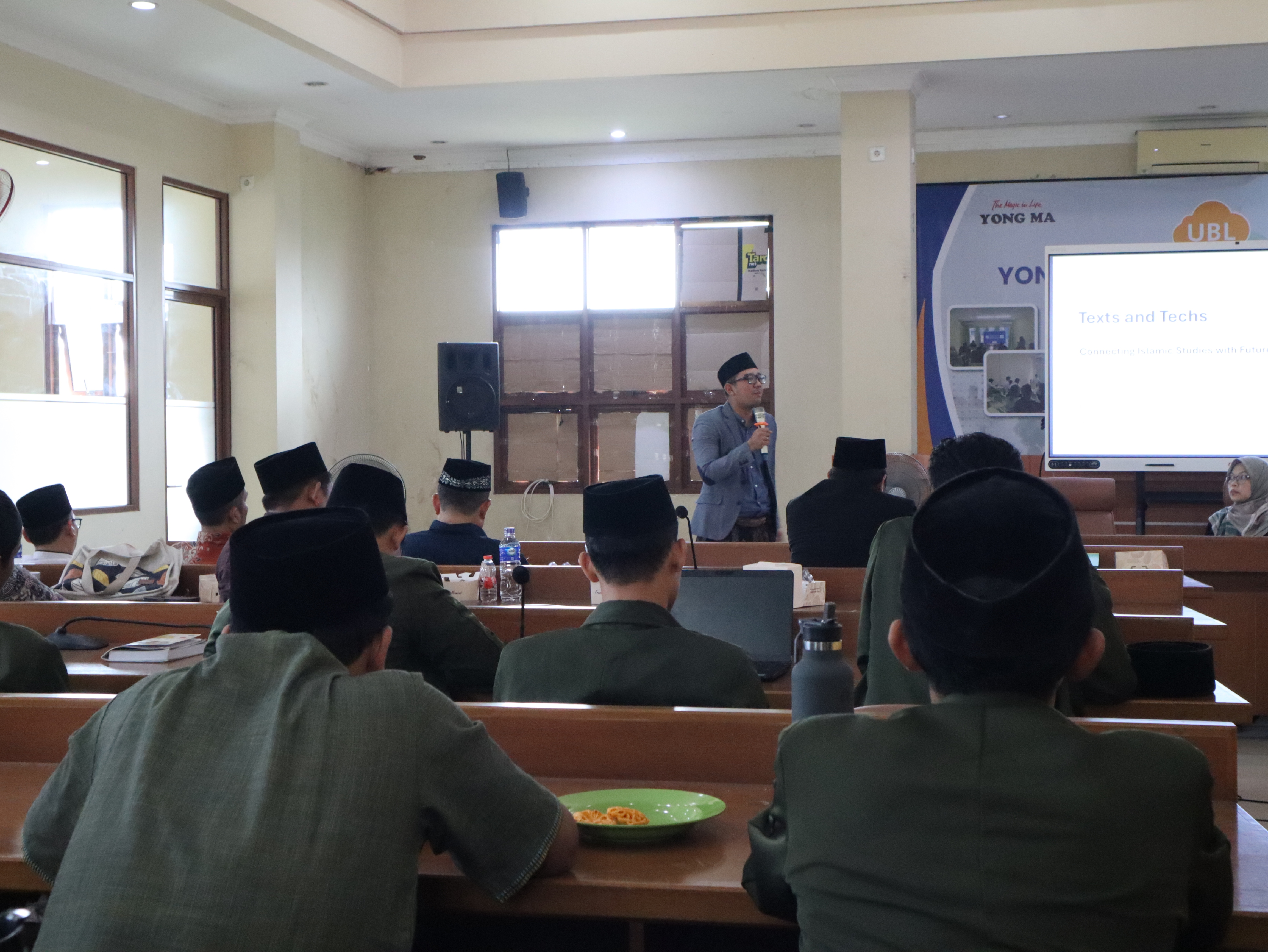
Bringing the academic community of UIII and the pesantren-based scholarly tradition of STKQ Al-Hikam Depok into conversation, this engagement created a space where different intellectual experiences could meet, challenge one another, and generate new possibilities for Islamic scholarship. Rooted in UIII’s vision of “Decentering Islamic Studies and Bridging the World,” the program highlighted the importance of moving beyond established academic boundaries, recognizing diverse centers of knowledge, and connecting classical Islamic traditions with contemporary intellectual developments. More than an academic gathering, the initiative marked an opportunity to strengthen ties between institutions and nurture a generation of santri ready to participate in wider intellectual conversations.