
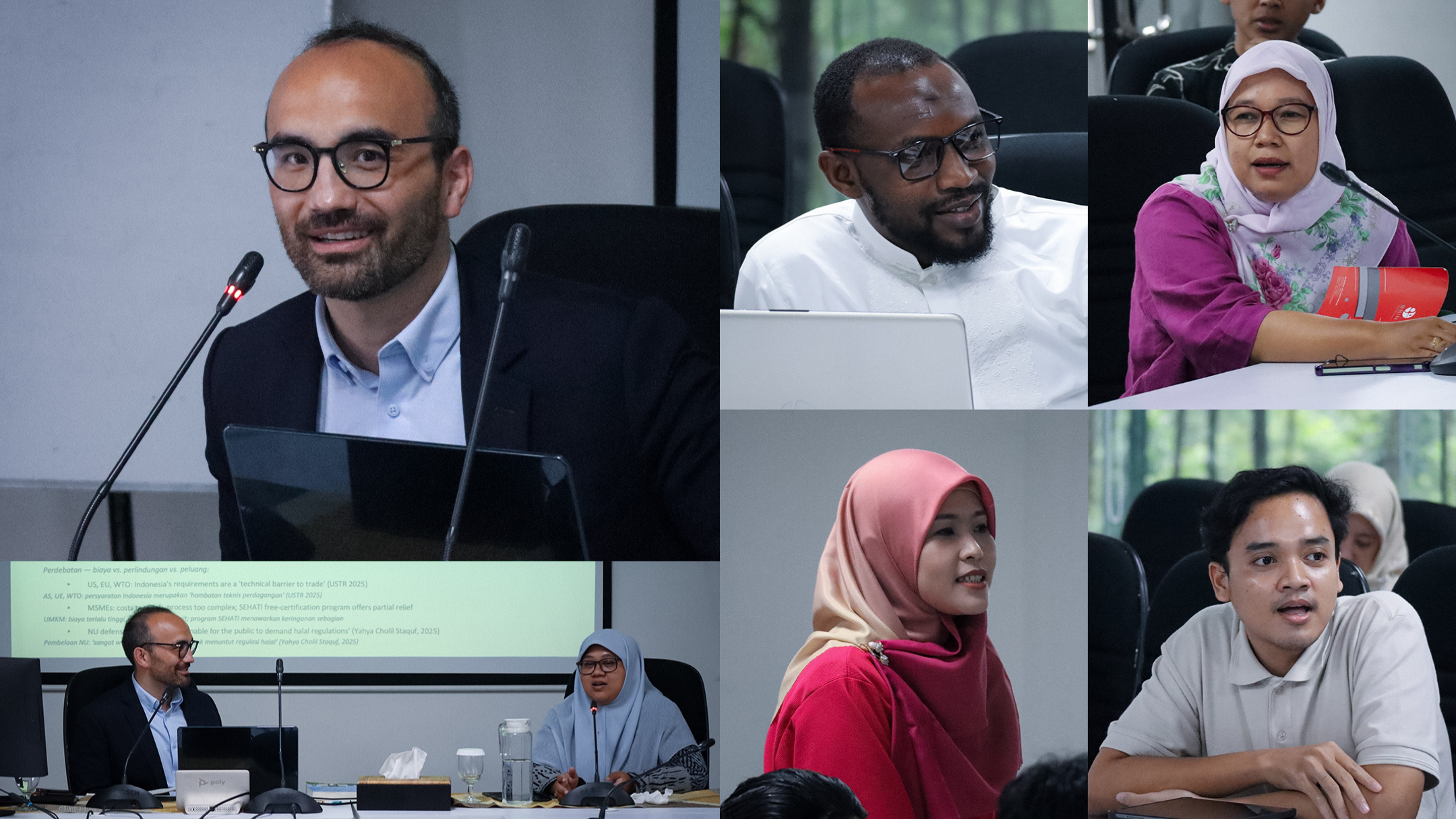
Depok – The Faculty of Islamic Studies at Universitas Islam Internasional Indonesia (UIII) hosted a public lecture titled “Halalization in the Global Islamic Economy” on Wednesday, May 20, 2026. The event featured Dr. Ryan M. Calder, Associate Professor of Sociology and Director of the Islamic Studies Program at Johns Hopkins University, USA. In light of the topic’s interdisciplinary relevance, the lecture was attended by a diverse audience, including students and faculty members from the Faculty of Islamic Studies, the Faculty of Social Sciences, and the Faculty of Economics and Business, alongside external guests from institutions like the National Research and Innovation Agency (BRIN).
Dr. Calder opened his presentation by defining “halalization” as a relatively modern construct. According to his research, institutionalized bureaucratic efforts toward halal certification are a 20th-century development, not an ancient practice. Throughout the lecture, Dr. Calder presented a comprehensive theoretical framework to explore the intersection between halalization and the secular market, using Indonesia as the primary case study.
The event shifted from a monologue to a dynamic academic discussion, featuring valuable insights from Dr. Phil. Syafiq Hasyim and Dr. Zezen Zaenal Mutaqin, who connected the theoretical discussion to current realities in Indonesia. The panelists and attendees discussed how modern halal certification has expanded to cover a wide and sometimes controversial range of products, no longer limited to meat but now including items such as cosmetics, refrigerators, and hospitality services. One of the main points of discussion was water certification. The debate raised crucial theological and practical questions: Is a water source at risk of being contaminated by najis (impurities) and does it require a special purification process to be legally considered halal?
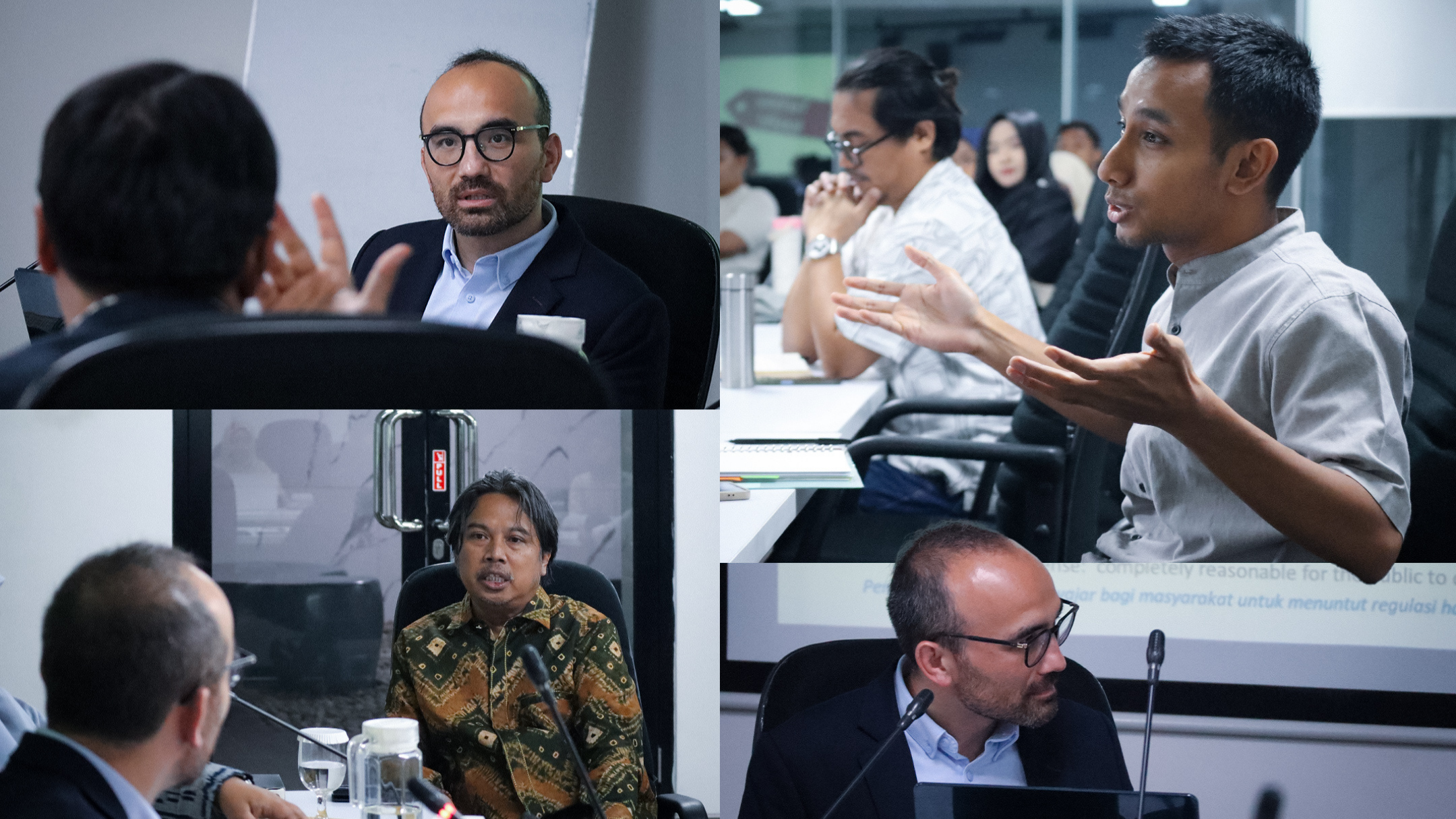
Dr. Calder shared intriguing behind-the-scenes insights from his field research across the globe, while comparing regulatory approaches between Malaysia and Indonesia. He recalled an interview he conducted in Brazil, the world’s largest exporter of halal meat, where he asked local producers which country had the strictest halal compliance standards. “The interviewee explicitly named Malaysia,” said Dr. Calder. “Since Muslims are a minority in Brazil, Malaysian authorities do not simply accept documents at face value. They fly directly to the slaughterhouses to audit the process and ensure that it strictly adheres to Islamic law.” Conversely, the discussion turned to domestic challenges within Indonesia’s halal bureaucracy. An insider’s perspective shared during the lecture revealed systemic complexities, indicating occasional “hidden agreements” between certification bodies and companies seeking validation.
In addition, the discussant noted that many Indonesian religious scholars had previously argued that the country should focus more on labeling haram products rather than certifying everything as halal. Given that Indonesia is a country with a Muslim majority, most local products are inherently considered permissible. However, the shift toward comprehensive halalization continues. A reality that the discussant openly attributed to the profit-driven nature of the certification industry, stating that “there is no money” to be made simply by labeling a few haram items.
The lecture concluded with a forward-looking discussion on why halal certification remains highly relevant to contemporary Indonesian society. This modern movement is heavily driven by consumer behaviour, particularly among Muslim Generation Z. In an era dominated by viral restaurants and trendy cafes, young consumers are highly cautious about what they consume. This concern has given rise to “halal influencers” who build large followings by reviewing dining establishments and verifying their ingredients for the public. Ultimately, the lecture reached a consensus that modern halalization cannot be separated from commercial interests. Summarizing the phenomenon, Dr. Hasyim observed that this trend serves as a prime example of how religion is integrated into the broader political economy.