
A photograph shows an African-American man in glasses, speaking with quiet confidence. Besides, a phrase that should resonate with many: From Darkness to Light.
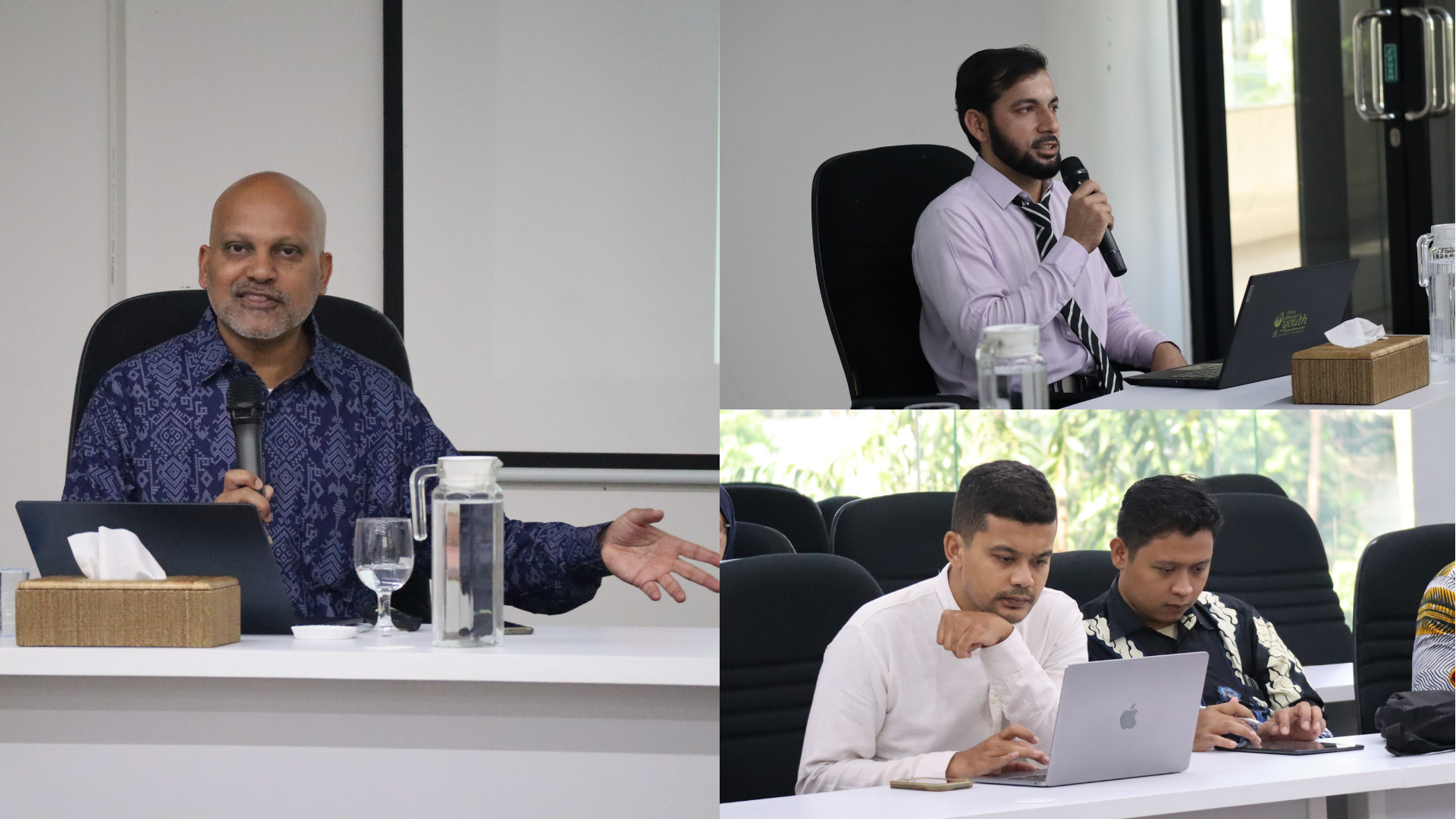
Harun Rasiah, a Senior Fellow at the Islam and Global Challenges (IGC) at UIII, delivered a public lecture on Malcolm X, a Black activist and pioneering voice of decolonial thought, hosted by the Faculty of Islamic Studies on Thursday, June 11, 2026. The event drew a diverse audience of students, faculty members from across UIII’s faculties, and external guests.
Prof. Rasiah opened his presentation by mapping the landscape of racism and structural discrimination in the United States, before tracing Malcolm X’s personal background and his conversion to Islam during imprisonment — a moment that catalyzed a profound intellectual transformation. That transformation, he argued, propelled Malcolm into a form of activism that demanded self-determination for Black communities and ultimately made him a global figure of human rights inspiration.
Central to Prof. Rasiah’s argument was the insistence that Malcolm X’s thought cannot be reduced to any single label. His ideas grew beyond the boundaries others imposed on him. The lecture identified three core commitments in Malcolm’s advocacy: the self-determination of thought and politics as a fundamental human right, decolonization, and the spirit of Islam.
In what amounted to a provocation as much as an academic argument, Prof. Rasiah called for decolonizing the university itself; dismantling Eurocentric epistemological structures, and recentring indigenous knowledge in academic life.
Closing his presentation, Prof. Rasiah outlined his ongoing project: to lift Malcolm X’s ideas out of their historical context and give them universal relevance. Ethnic studies, his own field, alongside Black studies and Islamic education in America, he noted, stand among the most enduring legacies of that singular activist. The remarks were received with sustained applause.
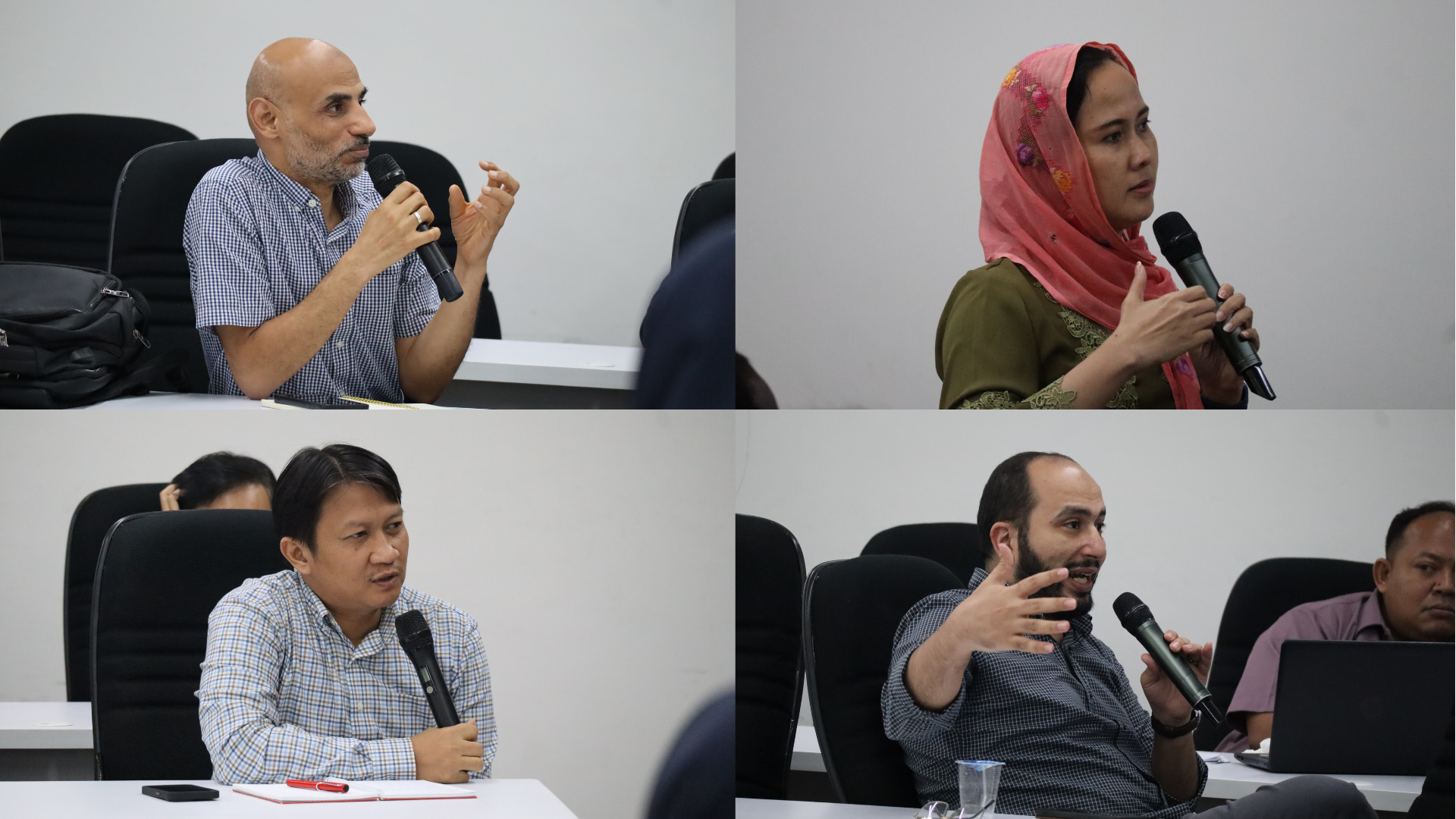
The lecture then moved into an open discussion. Dr. Zezen, a lecturer at the Faculty of Islamic Studies, raised the question of Malcolm X’s break from Elijah Muhammad and the Nation of Islam (NoI). Prof. Rasiah identified ideological divergence as the decisive factor: the NoI under Elijah Muhammad was structured around a Black-over-White racial hierarchy, whereas El-Hajj Malik El-Shabazz, the name Malcolm assumed after completing the Hajj, had arrived at a vision of universal human equality.
Dr. Afifi then asked about the tension of Malcolm’s multiple identities as both a convert to Islam and a Black activist, while Dr. Al-Marakeby raised the question of Malcolm’s relationship to decolonial studies in terms of theoretical production and written legacy. Prof. Rasiah engaged both questions substantively: Malcolm’s layered identities, he argued, gave his existential reflections their particular force, especially for marginalized peoples seeking to articulate their rights. As for the relationship with decolonial studies, while not one of direct intellectual lineage or written theory, Malcolm X served as a formative inspiration for many leading decolonial thinkers who carried that project forward.
The lecture ultimately resonated with one of UIII’s own institutional commitments: developing a pedagogy rooted not in Western hegemonic epistemology but in the living heritage of Islamic thought, an agenda that intersects directly with Malcolm X’s decolonial spirit. It is also an agenda, as Prof. Rasiah made clear, that he intends to advance: carrying the activist’s ideas from the register of history into the currency of universal relevance.