
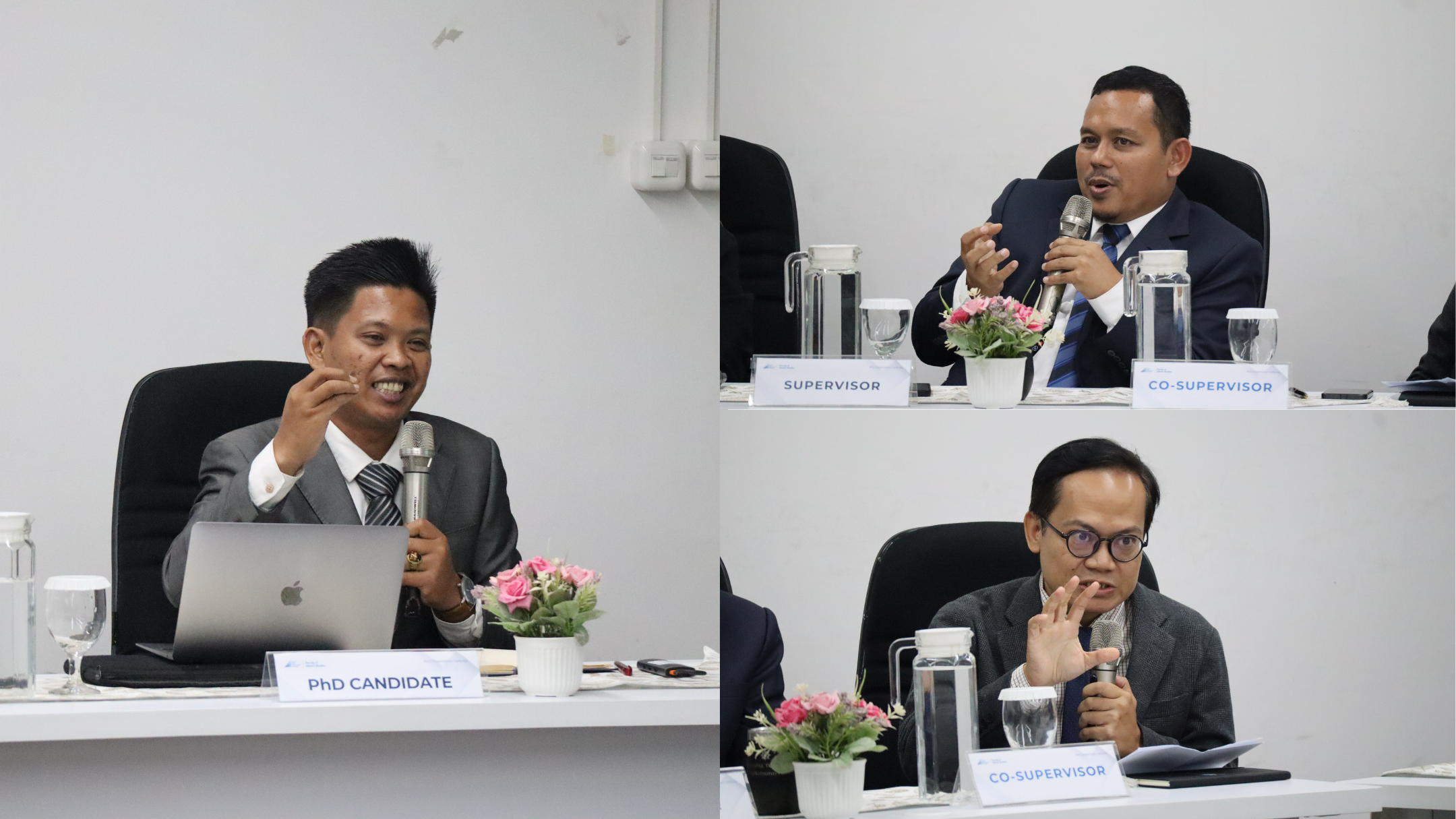
Depok – Faculty of Islamic Studies at Universitas Islam Internasional Indonesia (UIII) has unlocked a significant academic milestone, as Rifqi Nurdiansyah successfully defended his doctoral dissertation on May 20, 2026. His achievement marks the first PhD defense at the Faculty of Islamic Studies, representing an important step in the faculty’s growing contribution to scholarly research and academic excellence.
Reframing the Religious Identity
At the defense, Nurdiansyah presented a study that investigates the religious and cultural system of the Talang Mamak tribe in Riau, Sumatra, locally known as Islam Langkah Lama. The research focuses on a community that has long been marginalized within both academic scholarship and theological discourse. Historically, the religious practices of the Talang Mamak have often been labeled as animism, dynamism, or “syncretic Islam”, terms that, according to Nurdiansyah, carry normative, hierarchical, and often pejorative implications.
Challenging these reductionist classifications, the dissertation proposes the concept of Islamic Hybridity as a new analytical framework for understanding the Talang Mamak’s religious life. Drawing on the concept of the “Third Space” developed by postcolonial theorist Homi K. Bhabha, the study views Islam not as a fixed doctrinal essence but as a dynamic cultural formation shaped through historical encounters, negotiations, and power relations.
Introducing the Concept of Bounded Hybridity
To address what he identifies as the anti-essentialist limitations of conventional postcolonial theory, Nurdiansyah introduces the concept of Bounded Hybridity. Unlike theories that emphasize hybridity as an endlessly fluid process, Bounded Hybridity recognizes the existence of a stable ontological foundation. In the case of the Talang Mamak, this foundation remains firmly anchored in the Shahādah (profession of faith) and the principle of Tawḥīd (the oneness of God), which provide enduring boundaries for religious identity despite cultural adaptation and transformation.
Scholarly Contribution to Contemporary Islamic Studies
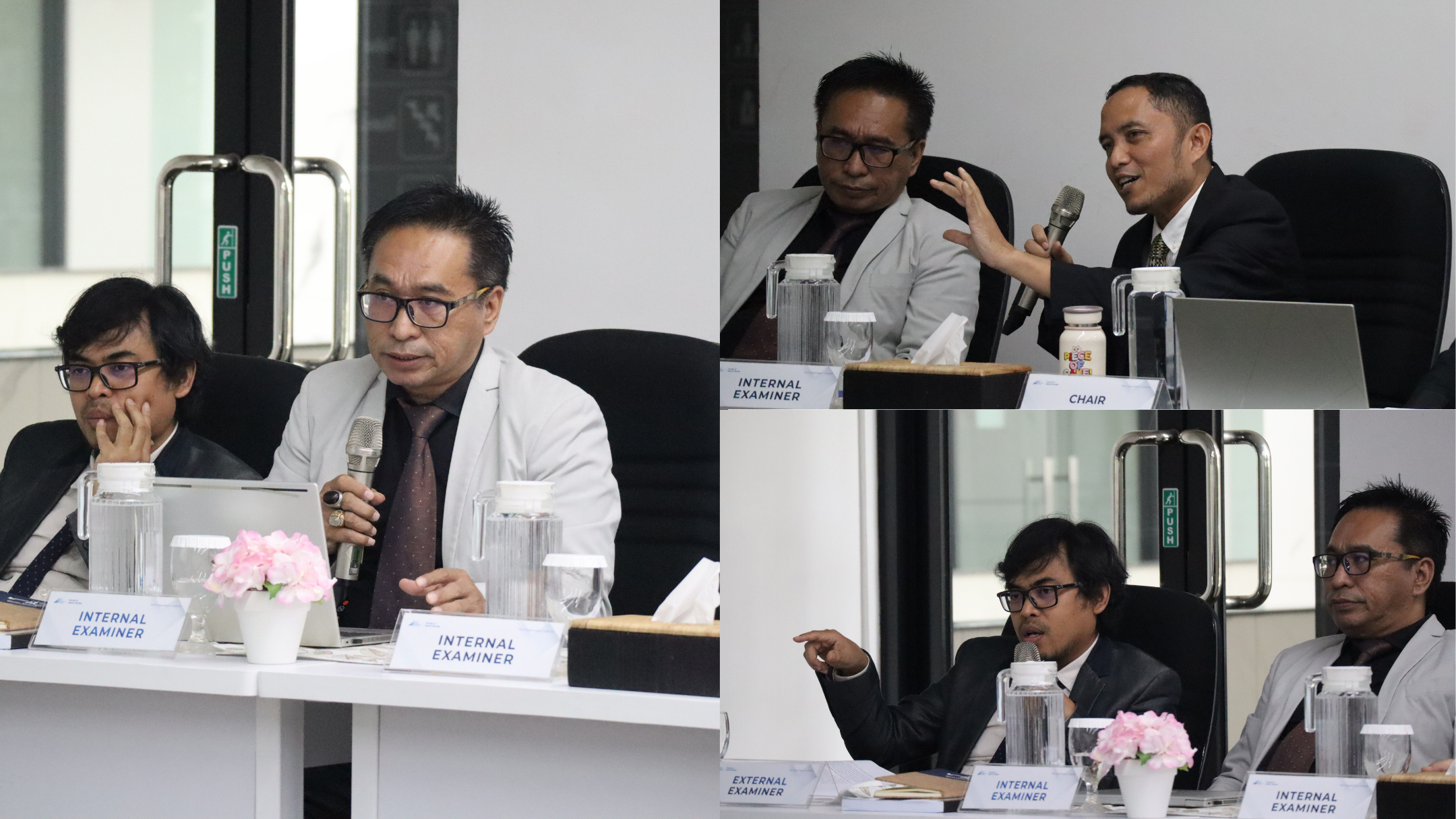
The defense sparked a vibrant academic discussion among the examiners, who praised the study’s originality while offering constructive feedback on its theoretical and methodological foundations. The discussion focused on key issues such as the terminology used to describe indigenous communities, the politics of religious classification, debates surrounding local Islam and syncretism, and the broader implications of the concept of Islamic Hybridity. The panel particularly welcomed Nurdiansyah’s concept of Bounded Hybridity, which explains how the Talang Mamak community negotiates local cultural traditions while remaining anchored in the core Islamic principles of Shahādah and Tawḥīd. While offering recommendations for further refinement and publication, the examiners agreed that the dissertation represents a significant contribution to contemporary Islamic Studies and the understanding of indigenous Muslim communities in Southeast Asia.
A Historic Milestone for the Faculty of Islamic Studies
Following the examination and deliberation, the assessment committee unanimously declared that Nurdiansyah had successfully passed the defense with the distinction of cum laude. The committee consisted of Haula Noor, Ph.D (Chair), Bhirawa Anoraga, Ph.D (Secretary), Dr. Ade Jaya Suryani (Examiner I), Prof. Syamsul Rijal, Ph.D (Examiner II), and Ridwan, Ph.D (Examiner III), under the supervision of Prof. Yanwar Pribadi, Ph.D and Dr. Phil. Zacky Khairul Umam, as Co-Supervisor.
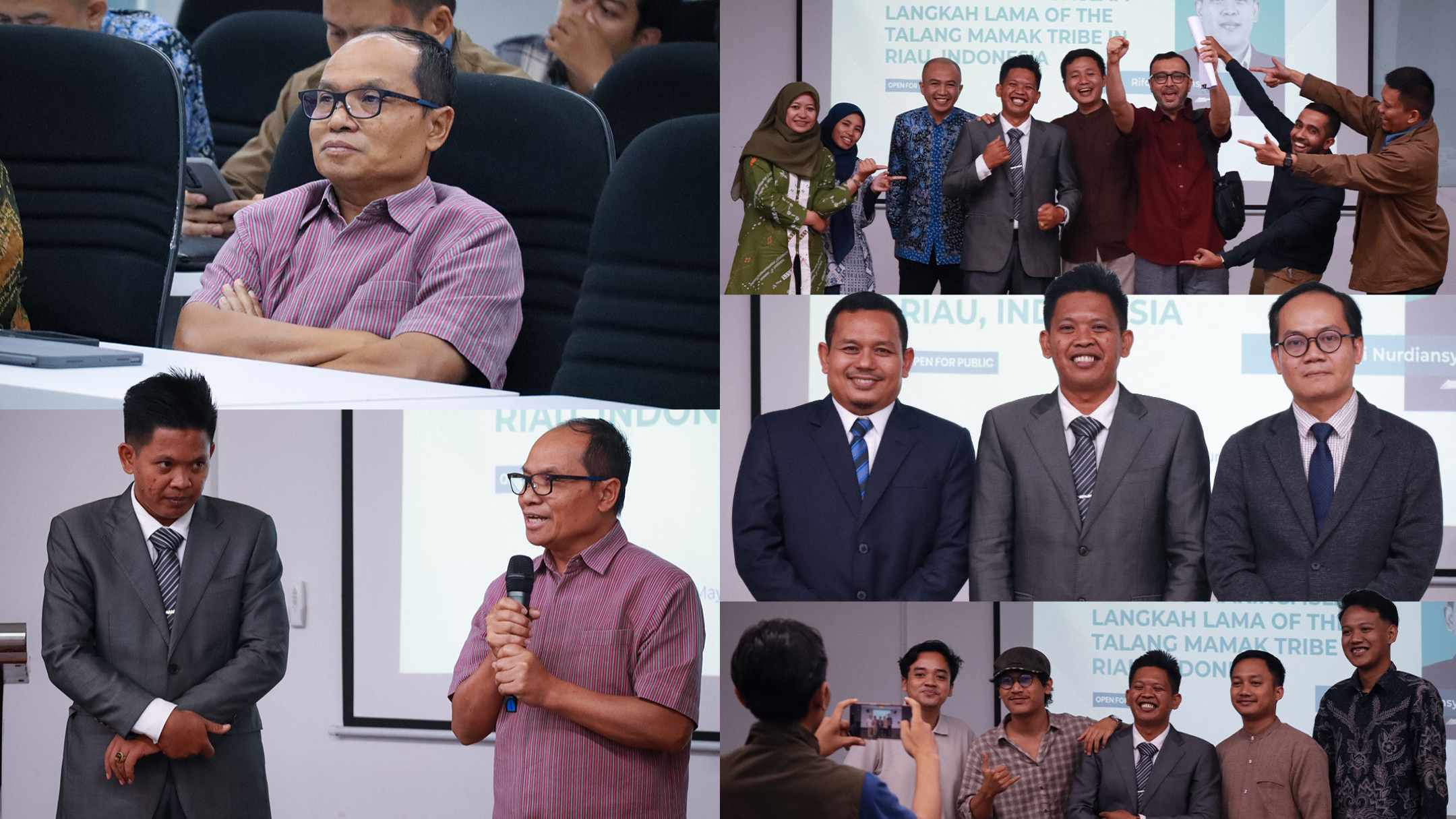
Speaking on the occasion, the Rector of UIII, Prof. Jamhari, expressed his gratitude and pride in witnessing the Faculty of Islamic Studies produce its first doctoral graduate. He also congratulated Nurdiansyah on this historic achievement and expressed his hope that he would continue contributing to the development of UIII and the advancement of Islamic scholarship in the future.
The defense was attended by faculty members, fellow doctoral candidates, students, and invited guests who gathered to witness this landmark moment in the history of the Faculty of Islamic Studies. Beyond its institutional significance, Nurdiansyah’s dissertation offers a timely contribution to ongoing discussions on indigenous Muslim communities, religious pluralism, and the diversity of Islamic expression in Indonesia. By centering the lived experiences of the Talang Mamak people, the study opens new avenues for understanding how faith, culture, and identity are continuously negotiated within contemporary Muslim societies.