
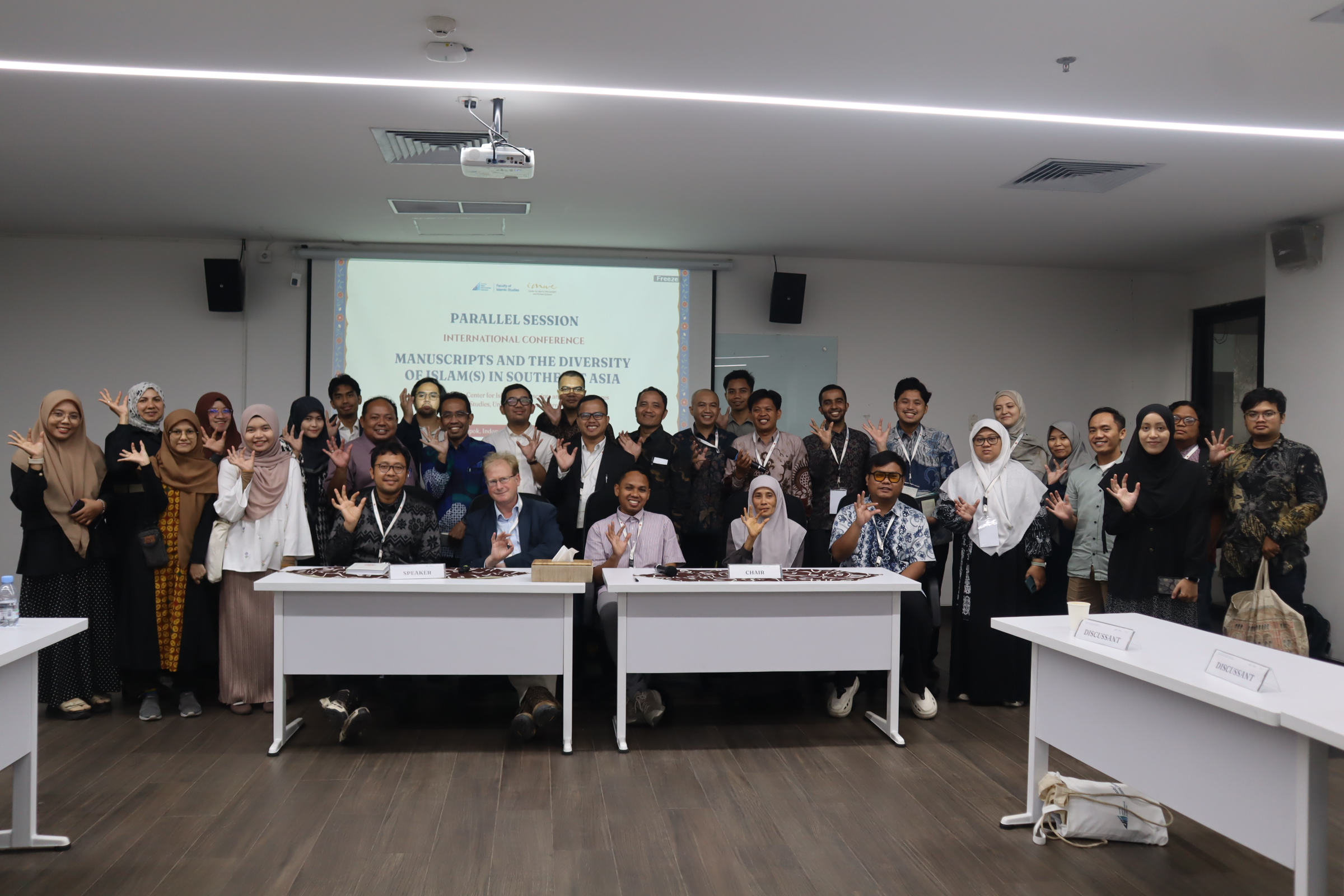
Depok – The International Conference on Manuscripts and the Diversity of Islam(s) in Southeast Asia, held by the Faculty of Islamic Studies (FIS), Universitas Islam Internasional Indonesia (UIII), in collaboration with the Center for Islamic Manuscripts and Written Cultures (IMWC), continued with a series of parallel academic panels that brought together diverse perspectives on manuscripts, Islamic intellectual traditions, and the circulation of knowledge across Southeast Asia.
The conference received 93 abstract submissions, reflecting strong international and interdisciplinary interest in the study of manuscripts and the diverse traditions of Islam in Southeast Asia. Following a rigorous selection process, 22 panelists from various academic backgrounds and institutions were selected to present their research during the two-day conference.
The program was organized into six thematic panels, each addressing different dimensions of manuscript studies and Islamic intellectual history:
Panel A: Legal and Political Authority
Panel B: Sufi Thought and Akbarian Tradition
Panel C: Preservation and Archival Challenges
Panel D: Manuscripts and Scholarly Authority in Local Islamic Traditions
Panel E: Manuscripts and Paratexts in Local Qur’anic Exegesis
Panel F: Sufism, Mobility, and Materiality in Javanese, Malay, and Chinese Manuscripts
Royal Visit and the Shared Legal Heritage of the Malay World
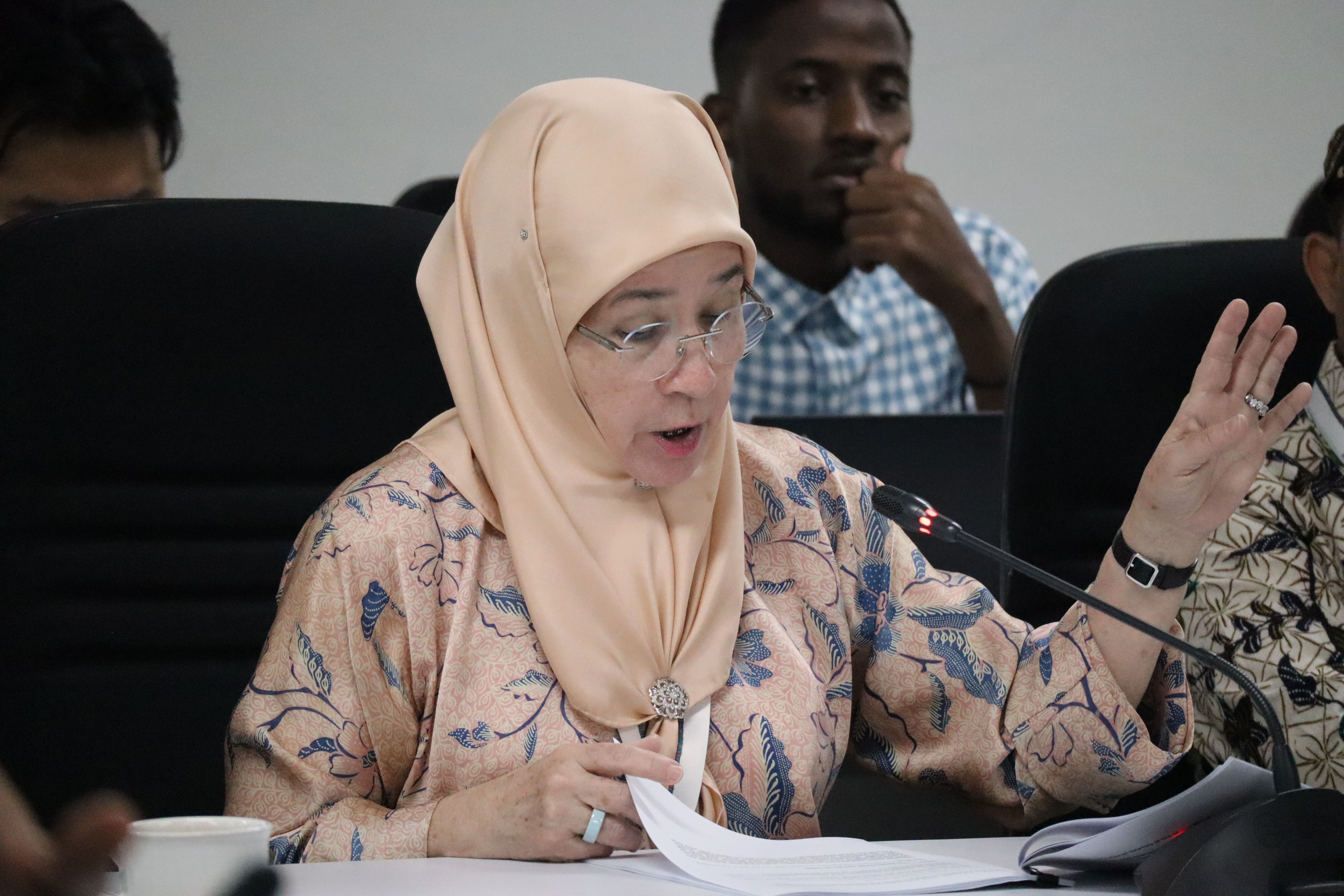
One of the highlights of the conference was the royal visit of Her Royal Highness Tengku Ampuan Pahang, Tunku Azizah binti Sultan Iskandar Al-Haj, who also participated as one of the panelists. Her presence added a distinctive dimension to the conference and highlighted the continuing importance of royal engagement with Islamic jurisprudence and manuscript traditions in the Malay world.
Her Royal Highness presented a discussion of classical Malay legal codes, including the Hukum Kanun Melaka and Hukum Kanun Pahang. Her presentation demonstrated how these legal texts brought together Islamic Shafiʿi jurisprudence and indigenous Malay customary law (Adat).
The discussion further highlighted the importance of these manuscripts as evidence of a shared and interconnected legal heritage across the Malay world. Rather than representing isolated traditions, the texts reveal intellectual, legal, and cultural connections that historically linked communities across present-day Malaysia and Indonesia.
Nusantara Scholars and the Manuscript Tradition of Qur’anic Recitation (Qirāʾāt)
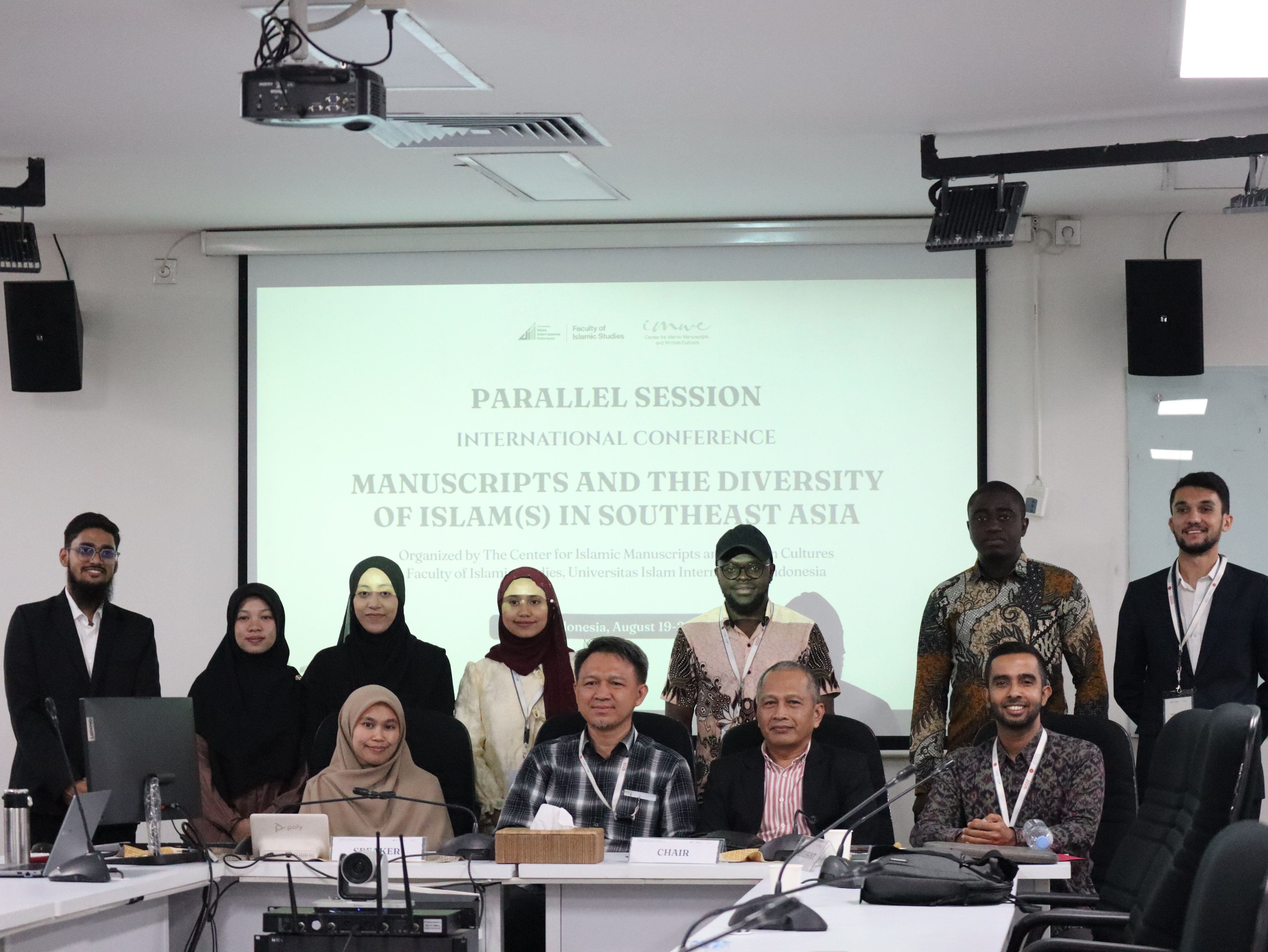
The conference also featured an Arabic panel in Panel D, underscoring the multilingual and transregional character of Islamic manuscript scholarship in Southeast Asia.
Among the presentations was a study entitled “دور علماء نوسانتارا في إسناد القراءات خلال القرن العشرين: دراسة مخطوط ‘الرسالة الترمسية في إسناد القراءات العشرية للشيخ محمد محفوظ الترمسي (1338ه/ 1920م)’”. The presentation offered a text-critical examination of Al-Risālah al-Tirmisīyah fī Isnād al-Qirāʾāt al-ʿAshrīyah, a manuscript documenting chains of transmission for the ten Qur’anic recitations associated with the Javanese-Meccan scholar Shaykh Maḥfūẓ al-Tirmisī (1868–1920).
The study traced the manuscript’s provenance from private libraries in Mecca to the Maktabat al-Ḥaram al-Makkī, while also addressing variations in the manuscript’s historical title. Using codicological and chronological evidence, the researcher clarified these title variations and reconstructed aspects of the manuscript’s transmission history.
This presentation illustrated how Southeast Asian Muslim scholars were not merely recipients of Islamic knowledge but actively participated in the production, transmission, and preservation of authoritative Islamic scholarly traditions across regional and transregional networks.
Connecting Manuscripts, Communities, and Intellectual Networks
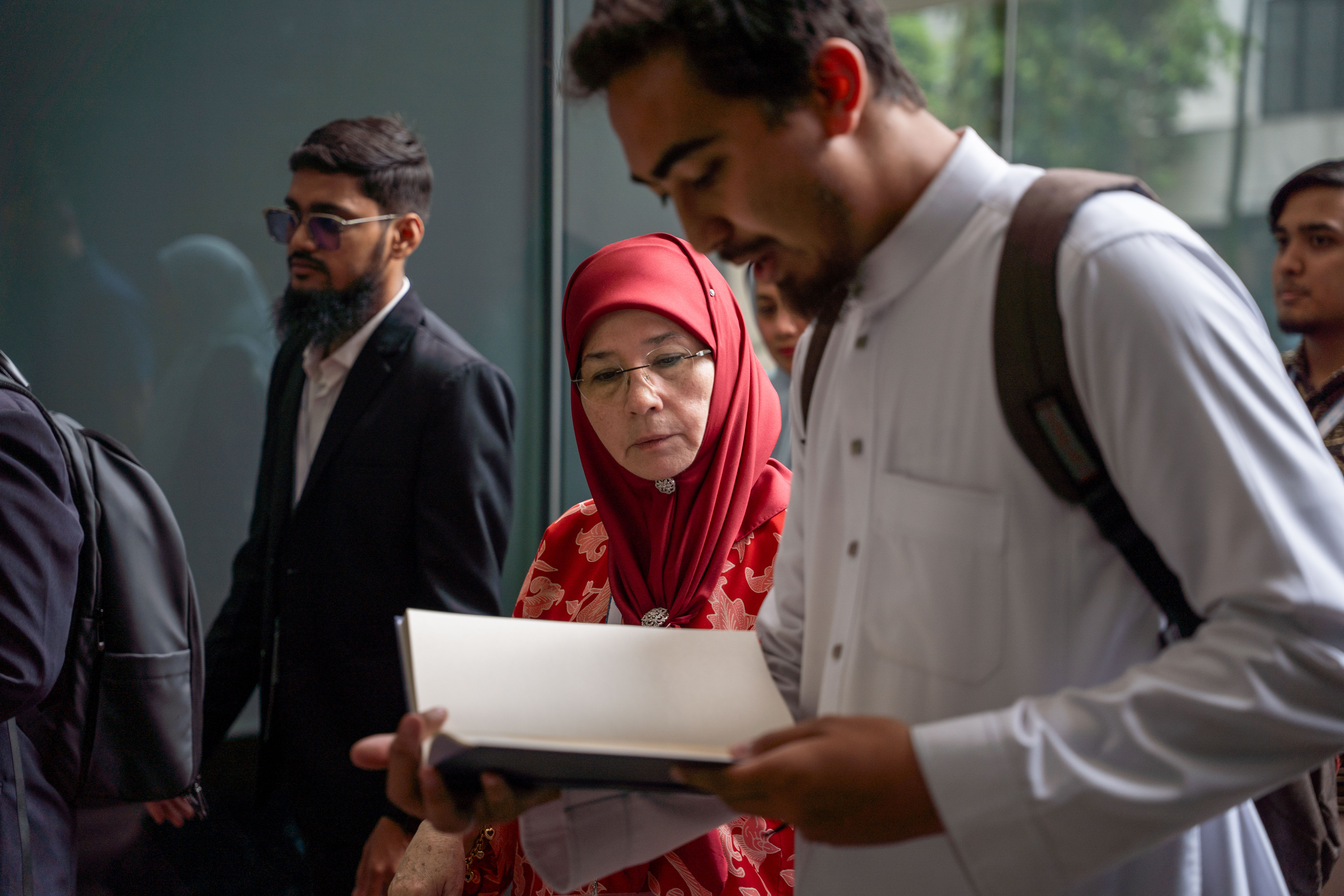
Taken together, the six panels demonstrated the breadth of manuscript studies as a field of inquiry. The presentations moved beyond manuscripts as static historical objects, examining them instead as dynamic records of knowledge transmission, scholarly authority, religious practice, political power, mobility, and cultural exchange.
The participation of scholars from different institutions and academic backgrounds, alongside the royal visit and contribution of Her Royal Highness to the academic program, further reinforced the conference’s central message: Southeast Asian Islamic manuscripts constitute a shared intellectual heritage that transcends contemporary national and institutional boundaries.
Through its diverse panels and interdisciplinary discussions, the conference provided an important platform for rethinking the history of Islam in Southeast Asia, one that places manuscripts, their custodians, scholars, communities, and transregional networks at the heart of the story.