
Depok — The morning of 23rd February 2026 marked a quiet but meaningful moment at Universitas Islam Internasional Indonesia (UIII). With the Rector’s Decree coming into force, Dr. Mahmoud Ali Gomaa Afifi officially joined the Faculty of Islamic Studies (FIS), bringing with him years of experience in Qur’anic studies and a passion for building bridges—between classical texts and contemporary realities, between tradition and modern scholarship, and between communities around the world.
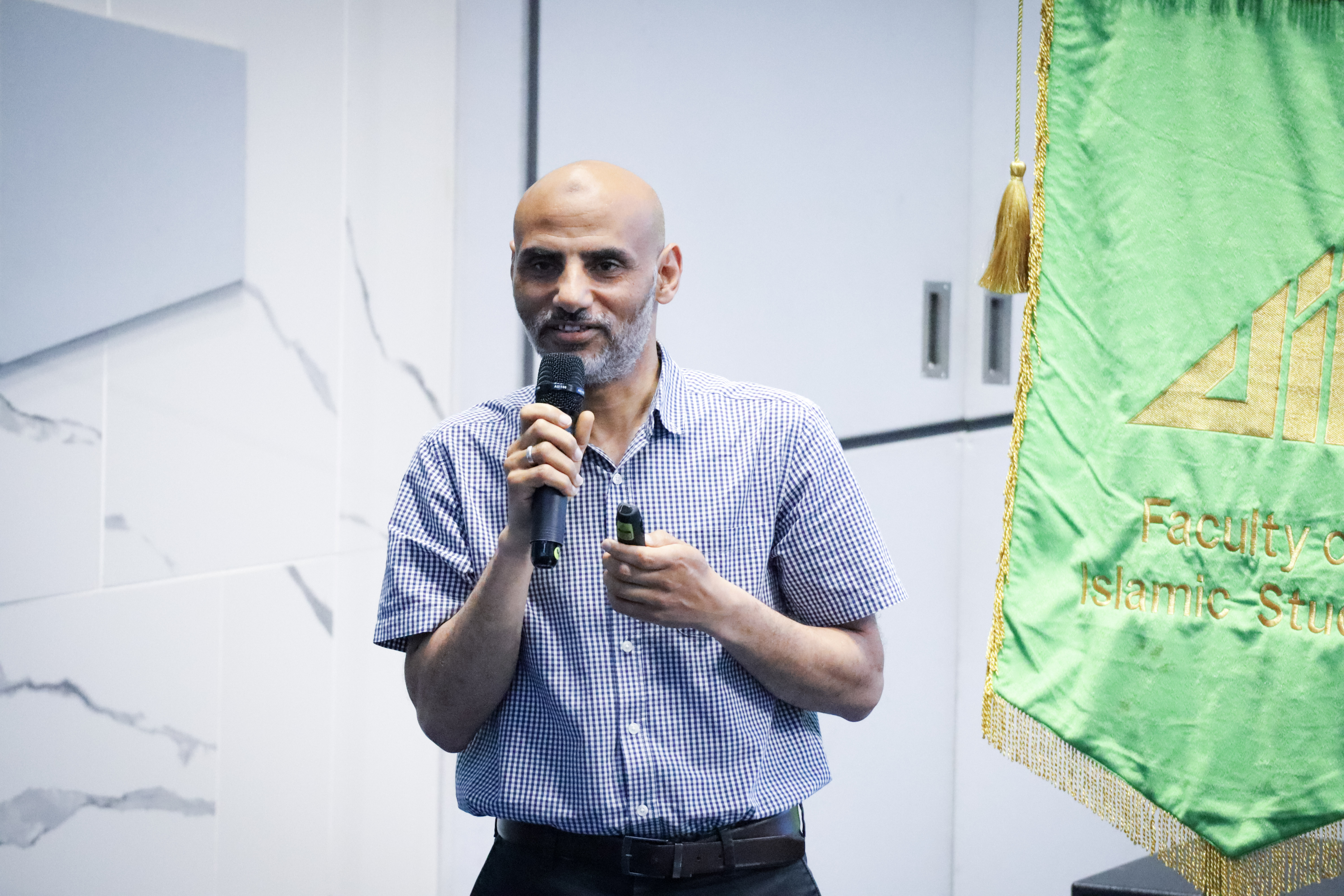
Dr. Afifi’s journey into Islamic studies began as a graduate of Al-Azhar University’s Faculty of English Islamic Studies, he later earned his MA in Islamic Studies at Claremont Graduate University in the United States and his PhD at Lancaster University in the United Kingdom, followed by postdoctoral research at SOAS in the project dldl/ድልድል: Building Bridges of Faith against Domestic Violence.
Specializing in Qur’anic hermeneutics, Dr. Afifi is drawn to the field because it brings classical traditions of tafsir into conversation with contemporary scholarship and problems, encouraging critical thinking while remaining anchored in the Qur’an. His research interests—gender in Islam, exegesis, and Islamic law—reflect his broader commitment to building bridges of understanding within and beyond Muslim communities, including interfaith work on combating domestic violence. He chose UIII because it is a hub where tradition and modernity meet, studying Islam through both traditional lenses and the humanities, and promoting a multicultural understanding of Islam.
In his teaching, Dr. Afifi emphasizes a constructive approach that invites students into deep reading, critical engagement, and the development of their own insights, rather than passive reception of information. He hopes to make FIS a platform where diverse voices can participate in meaningful discussion, supported by collaborations with academic and humanitarian institutions, and plans to publish his PhD dissertation during his time at UIII. Outside the classroom, he finds balance in spending time with his children, doing household activities, and cycling—small routines that keep him grounded as he looks forward to learning from his students as much as teaching them.