
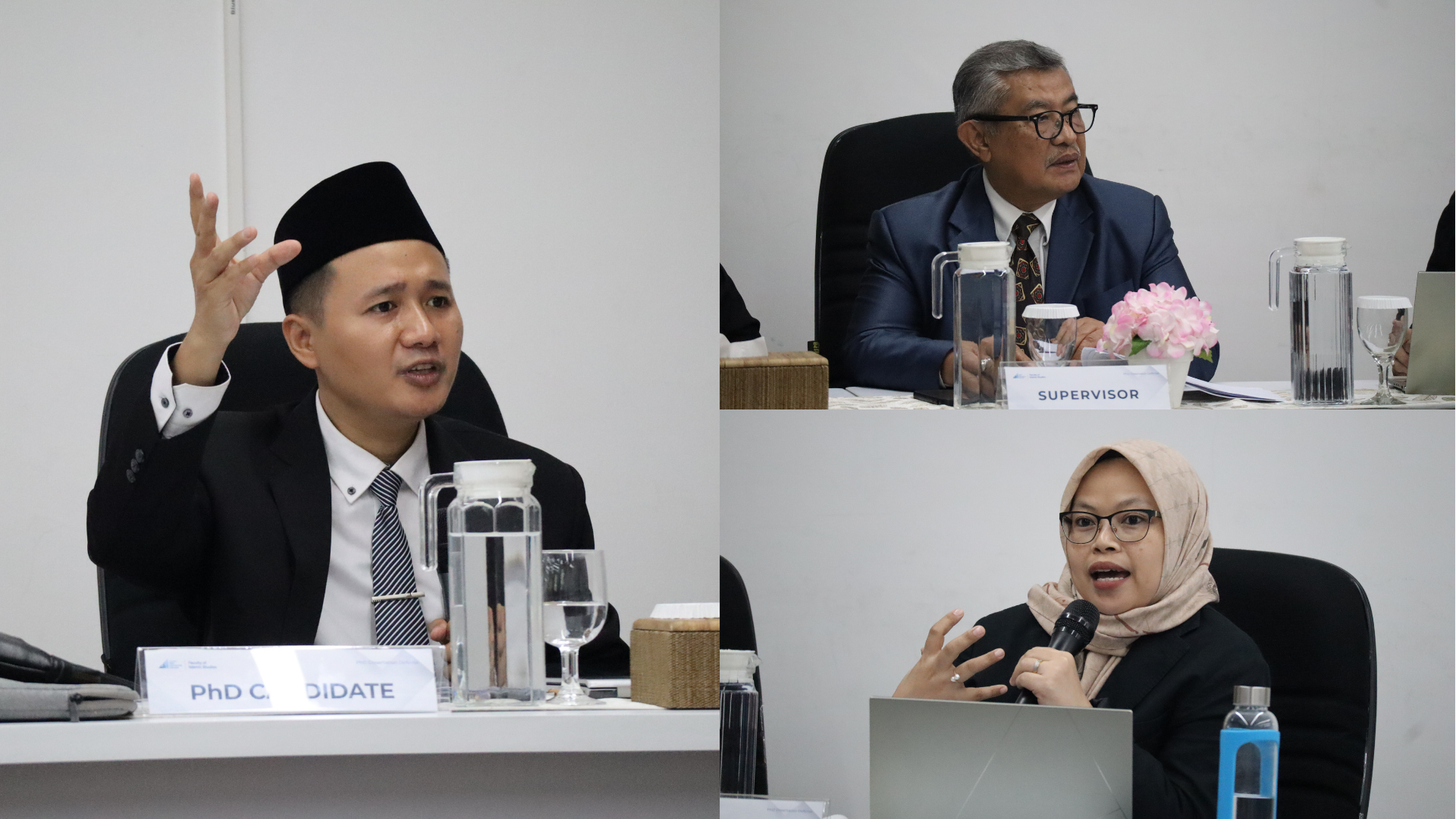
Depok – The Faculty of Islamic Studies at Universitas Islam Internasional Indonesia (UIII) celebrated another important academic achievement as Dito Alif Pratama successfully defended his doctoral dissertation on June 3, 2026. His dissertation, titled “Ideology, Power Relation, and Political Reconciliation: Nahdlatul Ulama and Muhammadiyah’s Anti-Communism Discourses in the Post-Soeharto Era,” explores how anti-communist narratives continue to shape Indonesia’s political and religious landscape more than two decades after the fall of the New Order regime.
Conducted within the Ph.D. Program in Islamic Studies, the dissertation offers a comprehensive analysis of how Indonesia’s two largest Islamic organizations, Nahdlatul Ulama (NU) and Muhammadiyah, construct, reproduce, and negotiate anti-communist discourse in the democratic era.
Tracing the Persistence of Anti-Communism in Contemporary Indonesia
Drawing upon organizational documents, media publications, symposium records, interviews, and focus group discussions conducted between 1998 and 2025, Pratama argues that anti-communism in Indonesia is not merely a historical legacy of the New Order. Rather, it remains an evolving discourse that continues to influence contemporary political alignments, religious authority, and public memory.
Using the framing theory of Robert M. Entman, the dissertation examines anti-communism through three interconnected dimensions: ideology, power relations, and political reconciliation. The findings reveal that both NU and Muhammadiyah continue to sustain anti-communist narratives through perceptions of communism as foreign, atheistic, and incompatible with Pancasila, alongside enduring historical memories of the 1948 and 1965 conflicts and persistent concerns regarding the possible resurgence of communist ideology.
The study further demonstrates how anti-communism functions as a political resource mobilized by both state actors and organizational elites to legitimize authority and shape political positioning within Indonesia’s democratic context.
Advancing the Concept of “Half-Hearted Reconciliation”
One of the dissertation’s major contributions is the introduction of the concept of “half-hearted reconciliation.” Through this concept, Pratama argues that while both NU and Muhammadiyah have shown some willingness to engage with the legacy of the 1965–1966 violence, such efforts often stop short of full accountability and structural transformation.
According to the dissertation, reconciliation remains constrained by historical stigma, legal restrictions, and competing interpretations of Indonesia’s past. As a result, discussions surrounding the humanitarian consequences of the 1965 tragedy continue to be approached cautiously and selectively.
By highlighting these limitations, the dissertation contributes to broader debates on historical memory, transitional justice, and reconciliation in post-authoritarian societies.
Dissertation’s Relevance and Scholarly Potential
The defense sparked a lively, critical discussion among the examiners, who commended the dissertation for addressing one of the most sensitive and enduring issues in Indonesian political and religious life. Discussions focused on several key themes, including the internal diversity of NU and Muhammadiyah, the balance between comparative analysis of the two organizations, the role of digital media in shaping anti-communist narratives, and the ongoing challenges of reconciliation in contemporary Indonesia.
The examiners praised the dissertation’s originality, particularly its concept of half-hearted reconciliation, while encouraging the candidate to strengthen the analytical sections, further balance the comparison between NU and Muhammadiyah, and expand engagement with contemporary political developments. They agreed that the dissertation offers a valuable contribution to the study of Islam, politics, collective memory, and reconciliation in Indonesia.
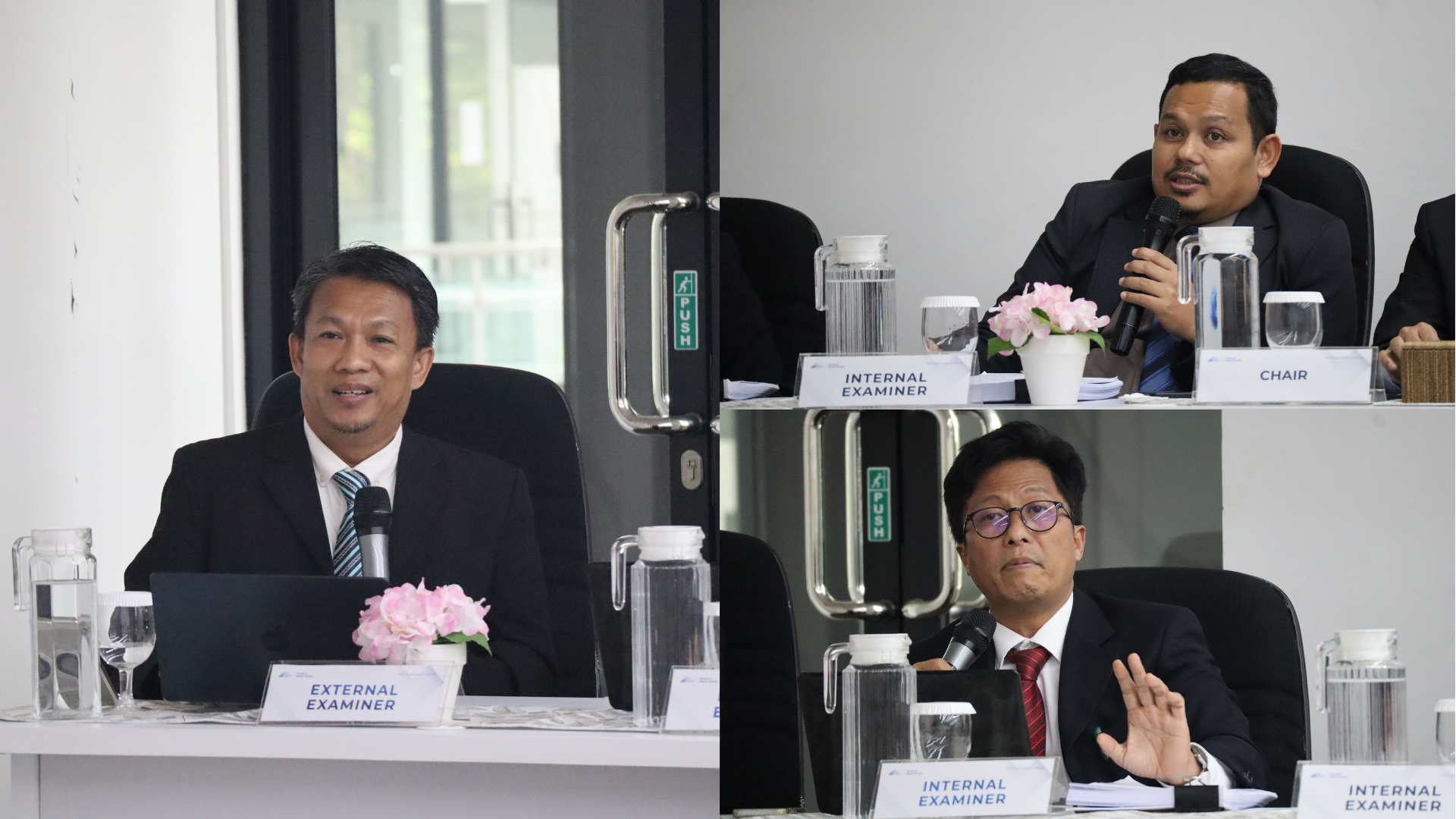
The examination committee consisted of Prof. Syamsul Rijal, Ph.D. (Chair), Dr. Akhmad Mughzi Abdillah (Secretary), Prof. Dr. Amsal Bakhtiar (Supervisor),Haula Noor, Ph.D. (Co-Supervisor), Dr. Hakimul Ikhwan (External Examiner), Prof. Yanwar Pribadi, Ph.D. (Internal Examiner I), and Dr. Alpha Amirrachman (Internal Examiner II). Throughout the defense, the examiners highlighted the dissertation’s relevance for understanding how historical narratives continue to influence contemporary political and religious discourse. They also noted the importance of examining anti-communism not only as a historical phenomenon but also as a living discourse that continues to shape public debates in democratic Indonesia.
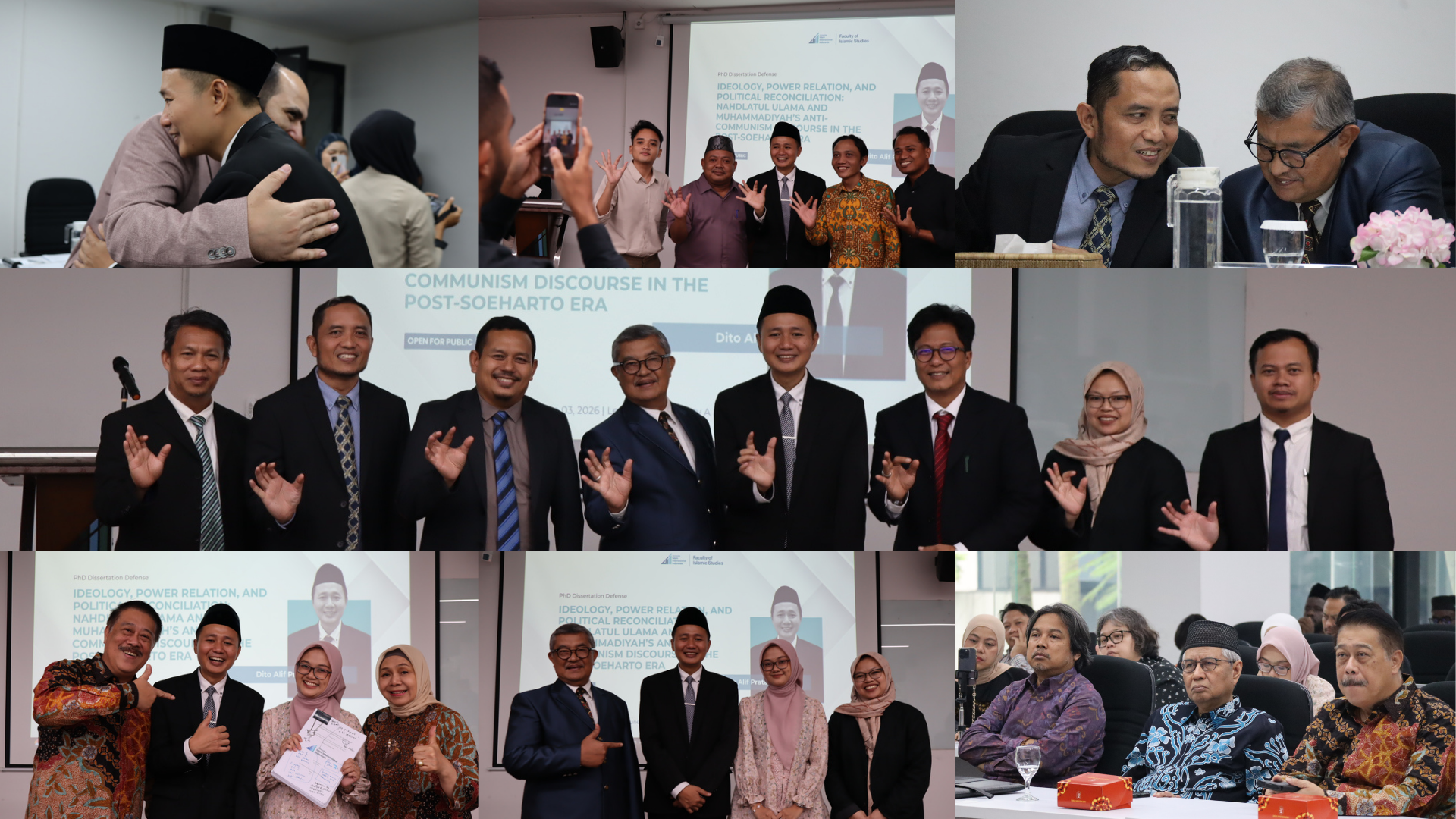
Following the examination and deliberation, the board of examiners declared that Pratama had successfully passed the dissertation defense with distinction (Cumlaude).
Attended by faculty members, doctoral students, and invited guests, the defense reflected the Faculty’s commitment to producing scholarship that engages critically with contemporary social and political challenges. By examining the intersections of ideology, power, religion, and memory, Pratama’s dissertation contributes to a deeper understanding of reconciliation and democratic development in post-Soeharto Indonesia while opening new avenues for future research on religious organizations and historical justice.