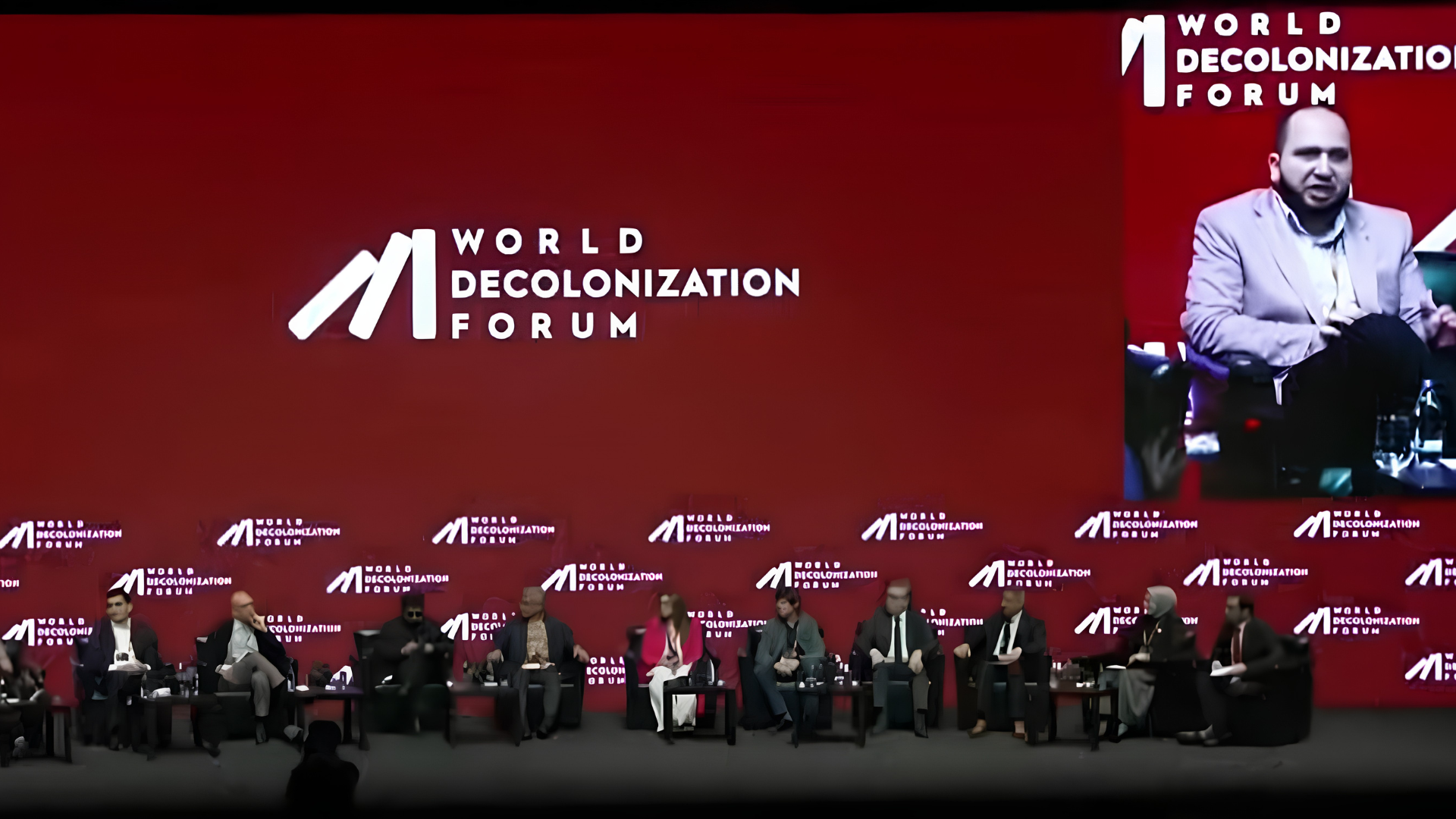
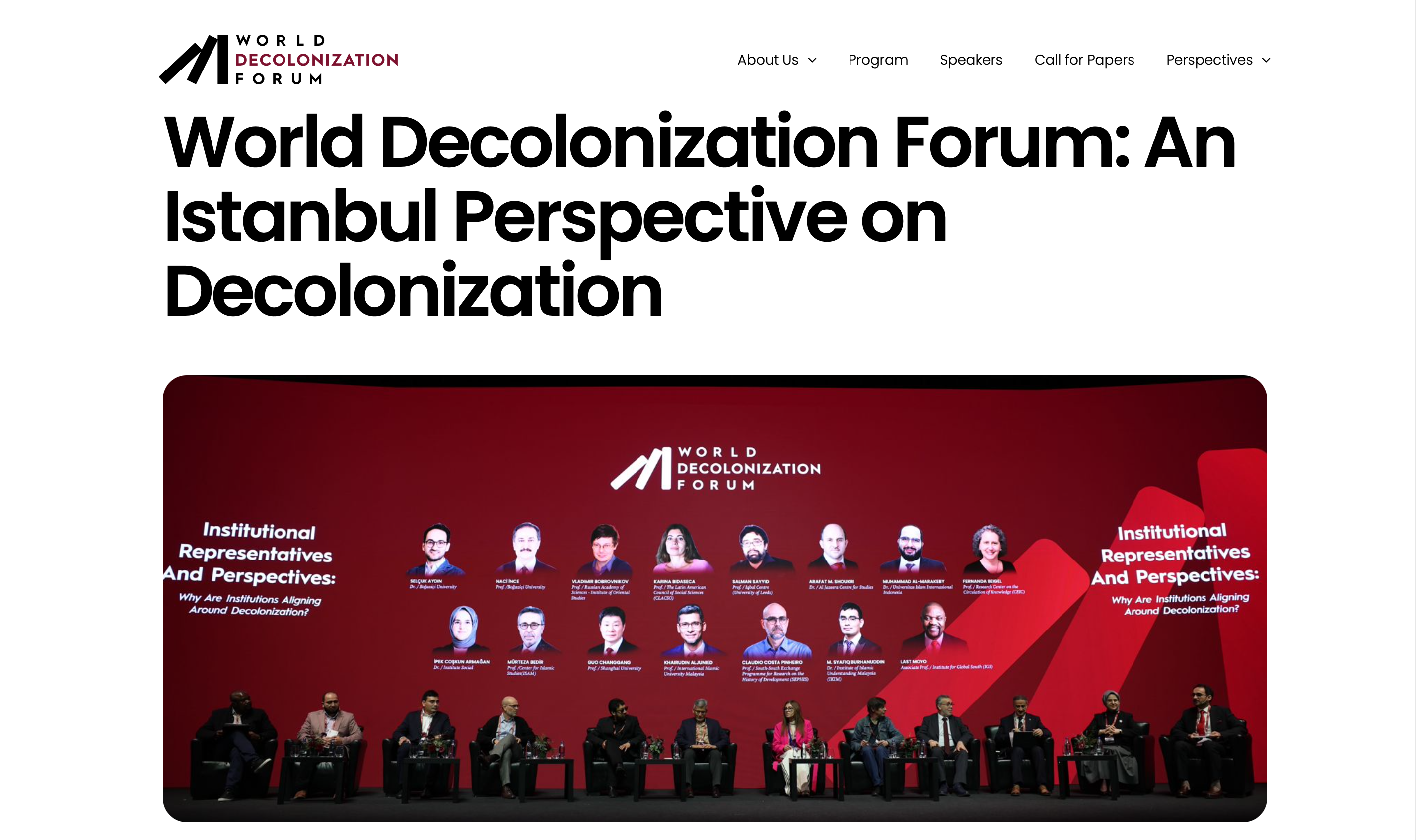
Depok – Dr. Muhammad Al-Marakeby, a lecturer at the Faculty of Islamic Studies, Universitas Islam Internasional Indonesia (UIII), recently represented the faculty at the World Decolonization Forum, held in Istanbul, Türkiye, on May 11–12, 2026. Bringing together leading scholars, intellectuals, and researchers from around the world, the forum served as a global platform for rethinking knowledge production and the future of decolonial scholarship.
Hosted at one of Istanbul’s largest convention centers, the forum attracted hundreds of participants and dozens of internationally recognized speakers. The event also received extensive media coverage from global news outlets, including Al Jazeera and Anadolu Agency, reflecting its significance within contemporary academic and public discourse.
“The conference provided a rare opportunity to meet several pioneering scholars in decolonial studies, including Walter Mignolo, who is widely regarded as one of the founders of the decolonial approach in Latin America. I also had the chance to engage with distinguished professors and friends in Islamic studies.”
Reflecting on the experience, Dr. Al-Marakeby described the forum as an important opportunity to engage directly with scholars whose work has shaped contemporary discussions on decolonial theory and global knowledge production.
Reimagining Academic Inquiry Beyond Eurocentrism
On the stage, Dr. Al-Marakeby presented a paper examining the decolonization of academia and the university, with particular attention to the future of Islamic Studies programs. His presentation argued that academic inquiry should move beyond narrowly Eurocentric assumptions that claim exclusive authority over objectivity and knowledge production.
Instead, he proposed a more inclusive understanding of scholarship that recognizes multiple intellectual traditions and epistemologies as equally legitimate contributors to academic knowledge. Such an approach, he argued, allows universities to foster richer and more balanced intellectual engagement without positioning non-Western traditions as secondary or peripheral.
Introducing the Turath Program to an International Audience
As part of his presentation, Dr. Al-Marakeby introduced the Faculty of Islamic Studies’ newly established Turath Program, highlighting it as an example of UIII’s commitment to rethinking Islamic Studies in a global academic context.
The program seeks to bridge Eastern and Western scholarly traditions by placing them on equal intellectual footing. Rather than viewing these traditions through hierarchical frameworks, the Turath Program encourages dialogue between different approaches to knowledge production, allowing classical Islamic scholarship and contemporary academic methodologies to enrich one another.
By presenting this initiative at an international forum, Dr. Al-Marakeby showcased the Faculty of Islamic Studies’ efforts to develop innovative models of International Islamic higher education that respond to current debates on decolonization, knowledge diversity, and academic inclusivity.
Strengthening International Academic Collaboration
Dr. Al-Marakeby noted that the World Decolonization Forum was organized through a collaborative initiative between the Faculty of Islamic Studies, UIII, and Institut Social in Istanbul. He expressed his appreciation to Prof. Yanwar Pribadi, Dean of the Faculty of Islamic Studies, and Prof. Syamsul Rijal for leading the collaboration and for making the event well-organized.
He emphasized that his participation represented not only an opportunity to share his own research but also to introduce UIII’s academic vision to a wider international audience.
Through participation in global scholarly forums such as the World Decolonization Forum, the Faculty of Islamic Studies continues to expand its international engagement while contributing Indonesian perspectives to contemporary debates on Islamic Studies, higher education, and the future of global knowledge production.