

Depok — The Faculty of Islamic Studies, UIII, proudly welcomes four new lecturers who will strengthen its academic profile in Islamic studies, particularly within the Turath Islam Program. The newly appointed faculty members bring diverse scholarly backgrounds and international experience, reflecting the university’s commitment to advancing global academic excellence.
Featuring Distinguished Scholars
Dr. Salahuddin Ayyub Fakhruddin
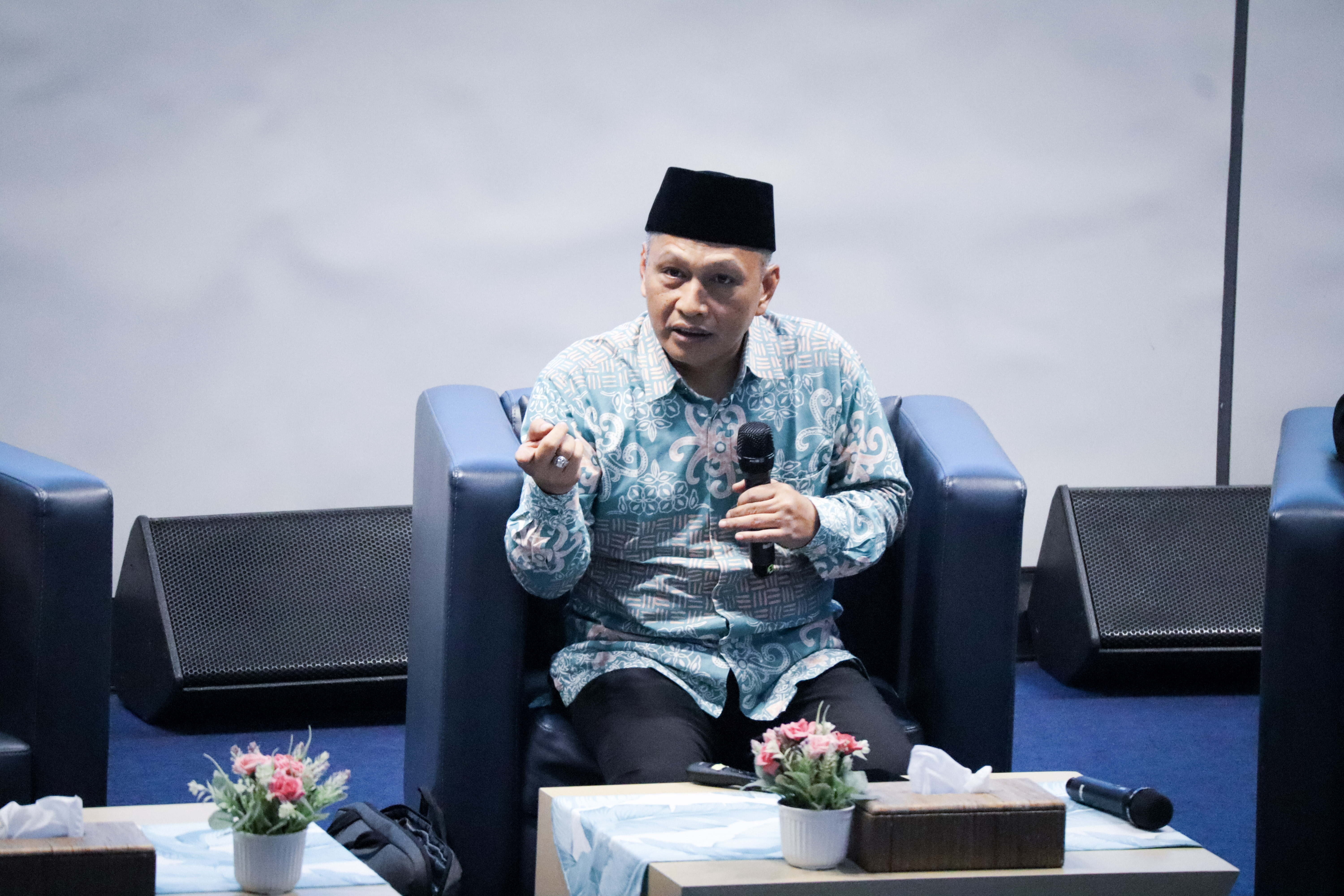
Dr. Fakhruddin is an Indonesian scholar specializing in Tafsir and Qur’anic Studies. He earned his Ph.D. in Tafsir from the Faculty of Ushuluddin at Al-Azhar University in Cairo, which is widely recognized as a global Islamic institution distinguished for its classical Islamic scholarly heritage. With a strong academic background, he is expected to contribute significantly to curriculum development and scholarly engagement within the faculty, particularly in the MA Turath Islam Program.
Prior to joining UIII, Dr. Fakhruddin served as a lecturer in the doctoral program on Qur’anic Exegesis Methodology at UIN Syarif Hidayatullah Jakarta (2021–2022). He also continues to contribute to advanced ulama training through the cadre education initiative at the Istiqlal Mosque in Jakarta.
Beyond his academic roles, Dr. Fakhruddin remains actively engaged in Islamic educational leadership. He currently oversees several pesantren and community-based religious initiatives across Indonesia, reflecting his sustained commitment to nurturing the next generation of Muslim scholars.
Dr. Maryam Qonitat
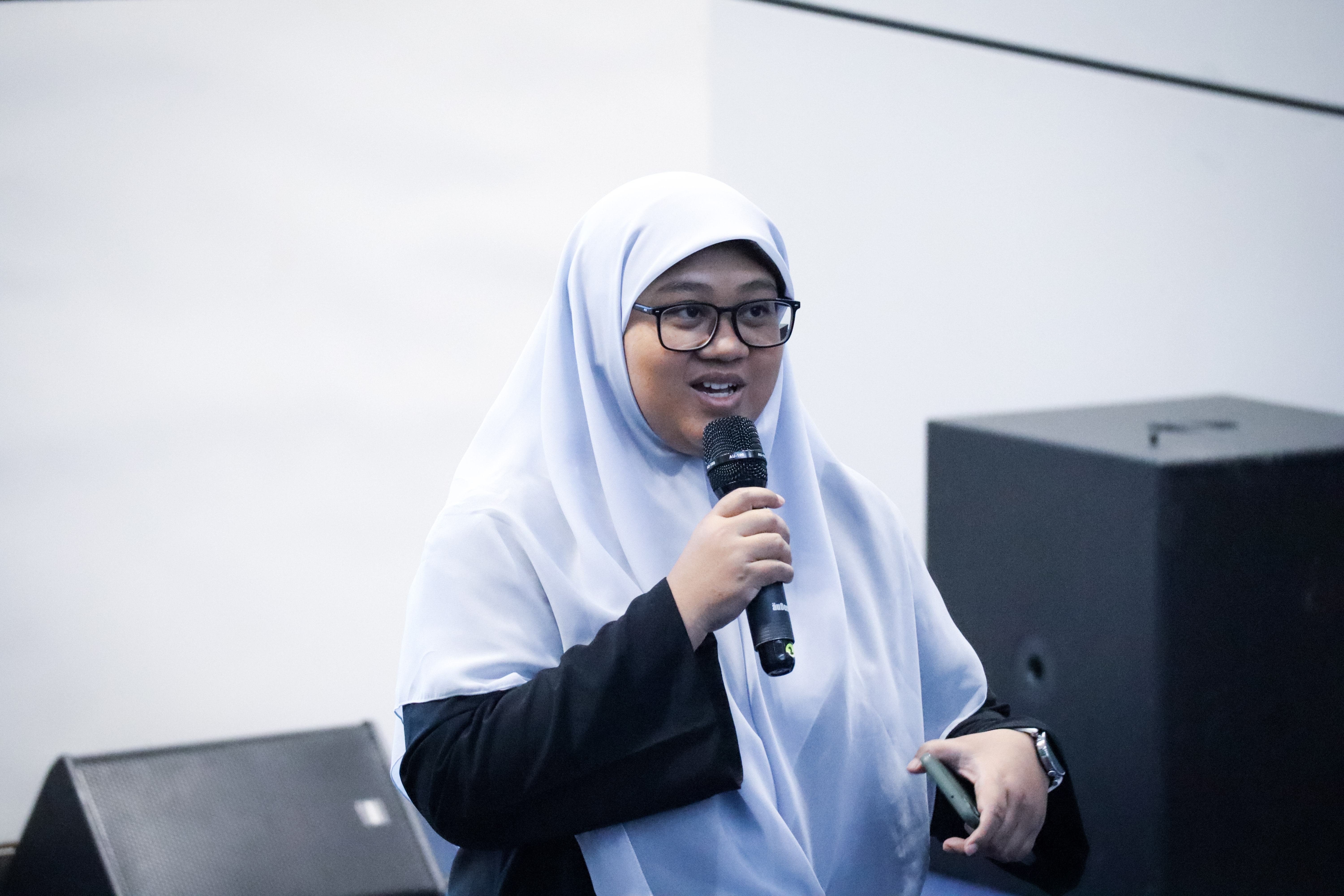
Dr. Qonitat is an Indonesian scholar whose work centers on Hadith studies and thematic Qur’anic exegesis. She earned her Ph.D. in Qur’an and Sunnah Studies from the International Islamic University Malaysia, where she deepened her academic focus on classical and contemporary approaches to Islamic scholarship. Her doctoral work “التحديات المعاصرة للمرأة المسلمة في تكوين الأسرة وحلولها في ضوء السنة النبوية: مدينة جاكرتا أنموذجا” examines social and religious challenges faced by Muslim women in Jakarta and explores Prophetic sunnah as a framework for addressing family-related issues in contemporary society. Through a contextual and hadith-based analysis, her research highlights the relevance of the Sunnah in responding to modern socio-cultural realities.
Before joining UIII, she served as a Lecturer in Tafsir and Qur’anic Studies at Sekolah Tinggi Ilmu Ushuluddin (STIU) Darul Hikmah in Bekasi. There, she taught a range of core subjects, including Qur’an, Ulumul Qur’an, and Manahij al-Muhaddithin, exploring the methodologies of leading hadith scholars such as Imam Bukhari, Imam Muslim, Imam Abu Dawud, Imam al-Tirmidhi, Imam ibn Majah, and Imam an-Nasai. In addition to her teaching responsibilities, she also contributed to academic publishing as Managing Editor of the Darul Hikmah Journal.
Beyond the classroom, Dr. Qonitat is deeply committed to community-based Islamic education. She is the Founder and Director of the Imtiyaz Learning Center in Depok, where she leads initiatives focused on women’s religious learning and empowerment. She also serves as Co-Founder and Chairperson of the Muyassar Qur’an Learning Center, overseeing curriculum development and institutional leadership to ensure sustainable and impactful Qur’anic education.
Dr. Mahmoud Ali Gomaa Afifi
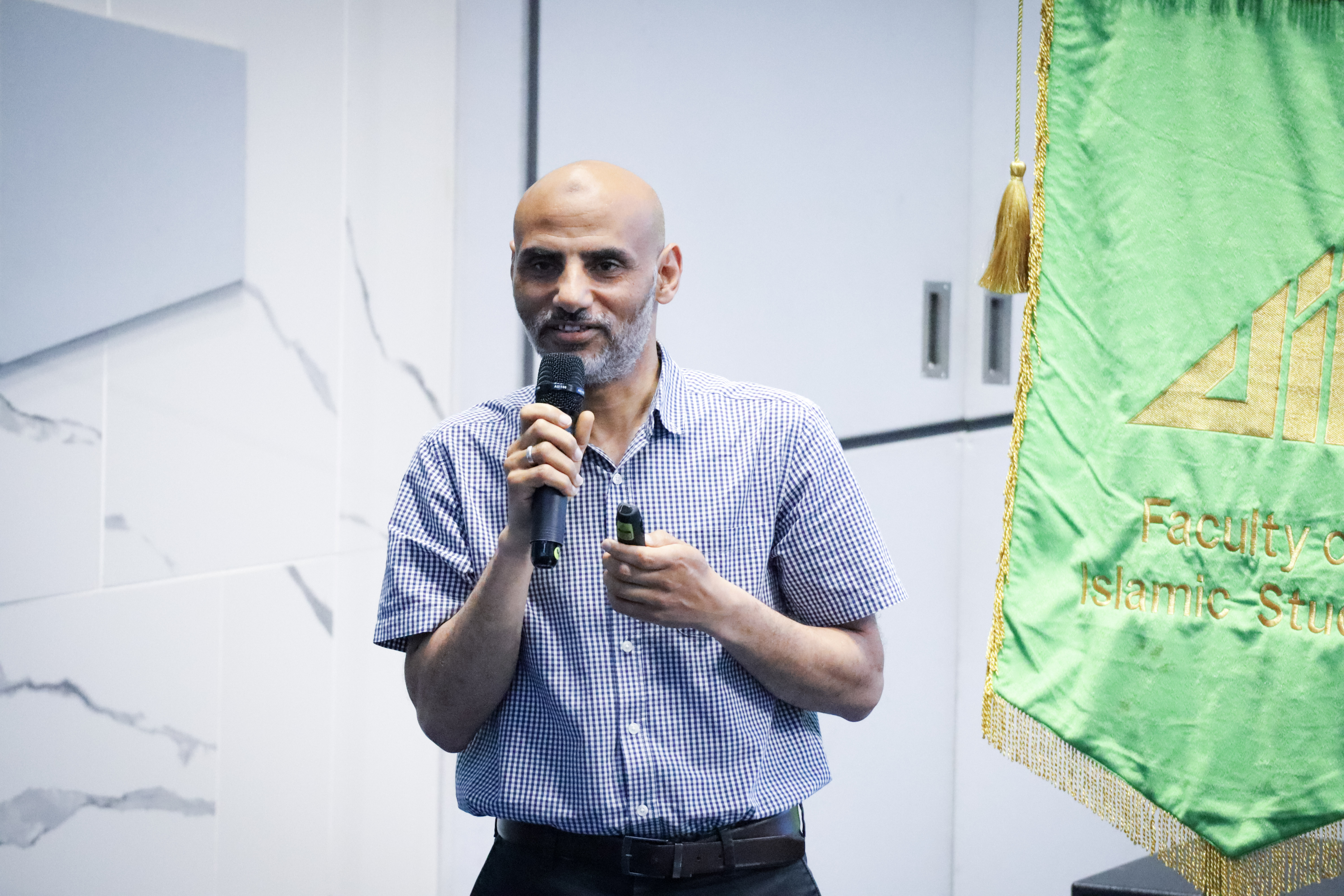
Dr. Afifi previously served as a visiting fellow at the Center for Islam and Global Challenges within the Faculty of Islamic Studies, UIII. He earned his Ph.D. in Religious Studies from Lancaster University in the UK. His doctoral thesis, “Understanding Q. 4:34 in Relation to Wife-abuse: Tradition, Feminists and Faith Leaders,” examines key intersections of Islamic law, Qur’anic interpretation, and gender discourse.
Dr. Afifi is an Egyptian scholar who completed the Associate Teaching Programme at Lancaster University and mandatory staff training at SOAS University of London. His academic career includes roles as an Adjunct Lecturer of Usul al-Fiqh at Al-Azhar University in Cairo, a Researcher in Islamic Studies focusing on sharia and tafsir at SOAS, and a Teaching Assistant in Religion at Lancaster University.
Additionally, Dr. Afifi has been actively engaged in international academic forums and conferences. He has presented widely on Qur’an 4:34, Islamic feminist hermeneutics, Islamic legal theory, and domestic abuse in Muslim contexts. His work has been featured at institutions such as the American University in Cairo, Leiden University, the University of Exeter, the University of Birmingham, and Al-Azhar University, as well as at international conferences in Italy and Ethiopia.
Through these scholarly and service-oriented engagements, Dr. Afifi demonstrates a sustained commitment to bridging classical Islamic scholarship with contemporary social discourses.
Dr. Jumana Hazem Elsamna
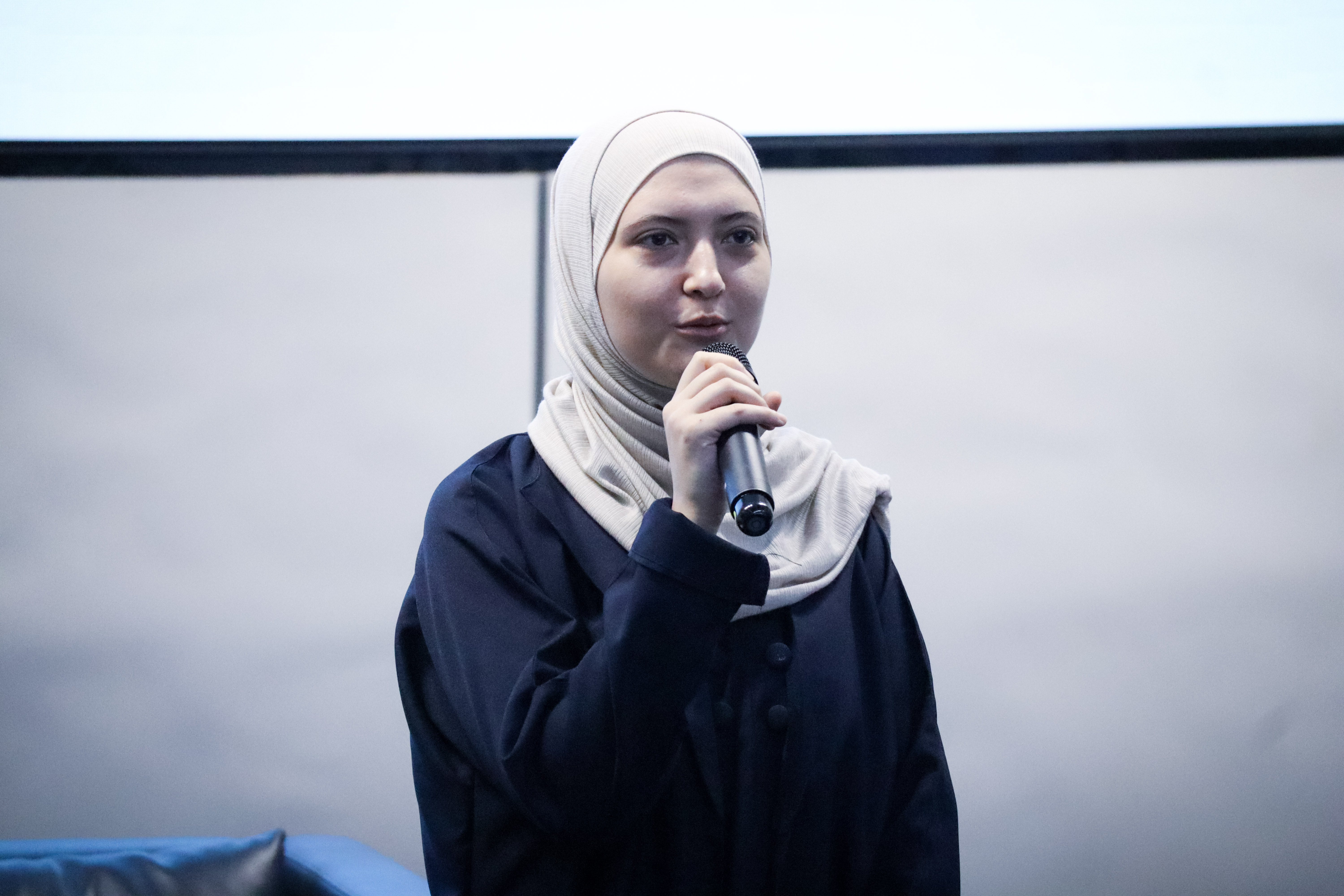
Dr. Elsamna is a distinguished Palestinian scholar in Islamic studies, specializing in Hadith and Sunna. She earned her Ph.D. in Hadith Studies from the Islamic University of Gaza, Palestine, with distinction. Her doctoral thesis, “The Moderation of Imam Al-Bukhari on Women’s Issues through the Chapter Headings of His Book, Sahih Al-Bukhari”,highlights her analytical approach to Islamic texts and her nuanced understanding of gender discourse in the prophetic tradition.
As a dedicated Islamic studies scholar, she has over five years of experience in higher education, curriculum development, and online instruction. Her work integrates traditional Hadith scholarship with modern teaching methodologies, making Islamic knowledge accessible and engaging for diverse international audiences.
Earlier in her career, Dr. Elsamna lectured at the Islamic University of Gaza in Palestine. She also has extensive experience teaching international students, supervising PhD research, and globally developing English-language Islamic curricula across multiple online institutions. Dr. Elsamna has also served on the Online Committee and as an assistant professor of Islamic Studies at the International Islamic University of Minnesota, designed comprehensive BA-level Aqeedah curricula for the International Open University, and taught Islamic Studies to English-speaking learners through platforms such as Ribat Institute, Darul Qur’an Leicester, and Dar Al Hadith Al-Raziyya. She has also developed certified school-level Islamic curricula in English through the Palestinian Ministry of Culture.
Advancing Global Vision
The appointment of these four scholars marks an important step in the Faculty’s effort to enhance teaching quality, expand research excellence, and strengthen international collaboration. Their combined expertise in Qur’anic studies, Hadith, tafsir, Islamic law, and contemporary Islamic studies is expected to stimulate students’ enthusiasm and contribute to the Faculty’s mission of producing globally engaged Muslim scholars.
We are very welcome the new lecturers and look forward to their academic contributions in the upcoming semester.