
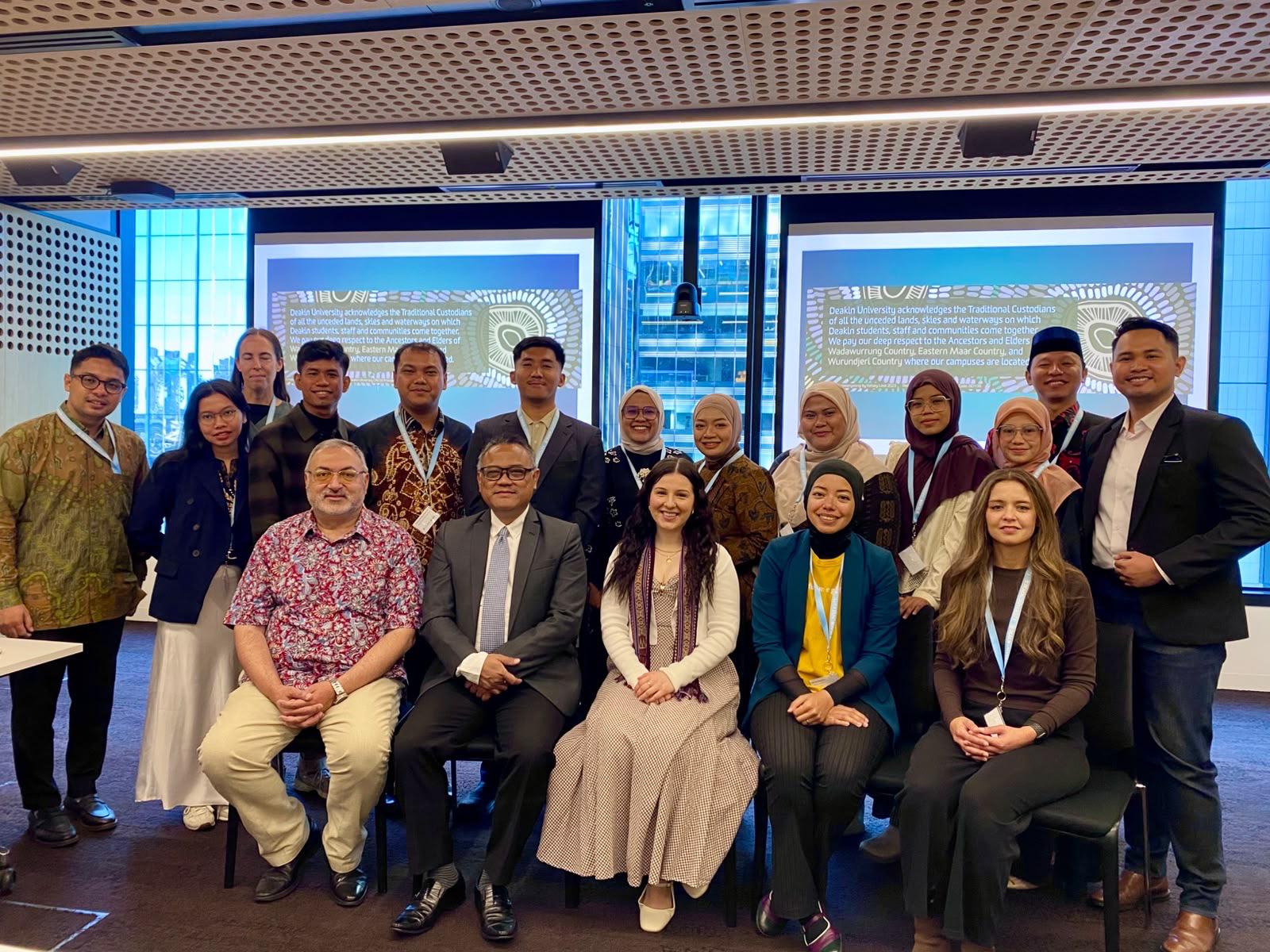
Melbourne – Two alumni of the Faculty of Islamic Studies (FIS) at Universitas Islam Internasional Indonesia (UIII), Abd Basith Abdullah and Nuzul Fitriansyah, have been selected to participate in the 2026 Australia–Indonesia Muslim Exchange Program (AIMEP), an international exchange initiative designed to strengthen connections and mutual understanding between Muslim communities in Australia and Indonesia.
Selected from a highly competitive pool of applicants, the two alumni bring distinct professional and academic perspectives to the program. Basith is a filmmaker whose work explores how research and ideas can be translated into visual storytelling. In contrast, Nuzul works as an Education and Advocacy Officer at a non-governmental organisation, focusing on access to formal education for refugee children in Indonesia.
Their selection reflects how academic knowledge can extend beyond the university into creative practice, public engagement, and community service.
A Competitive Selection Process
The 2026 AIMEP selection attracted nearly 2,000 applicants, with only around 20 participants selected. The process involved an initial assessment of application materials, followed by interviews for shortlisted candidates. Applicants were required to present their backgrounds, experiences, and contributions through written statements, CVs, and supporting documents.
For Basith, the application process was an opportunity to articulate how his academic interests could contribute to wider public conversations. Having completed a master’s degree in Islamic Studies at UIII and a master’s degree in Religion, Politics and Society at SOAS University of London, Basith is now developing his practice as a filmmaker while undertaking an internship in the media and communication office at UIII.
He sees filmmaking as a way to bring academic ideas beyond conventional scholarly publications and university classrooms. In an academic environment where research can remain inaccessible to wider audiences, he believes visual storytelling offers an alternative means of communicating complex ideas and reaching people emotionally as well as intellectually.
“People are moved not only by what they think but also by what they feel,” Basith explained, describing his interest in film as an educational tool that can make research more accessible and meaningful to broader audiences.
Turning Academic Knowledge into Social Impact
For Nuzul, who graduated from FIS UIII in 2023 as a member of the university’s first graduating cohort, AIMEP represents an opportunity to broaden his understanding of Muslim communities while strengthening his professional engagement with social issues.
He currently works as an Education and Advocacy Officer at an NGO, contributing to the Education for All project. His work focuses on advocating for refugee children’s access to formal education, particularly in Indonesian public schools. This involves engaging with schools, government institutions, and refugee communities to help improve educational opportunities for children who face barriers to accessing formal education.
Nuzul’s interest in AIMEP developed partly through observing the program’s alumni network and the contributions its members have made in their respective fields. His selection in 2026 came after an unsuccessful application the previous year. Rather than giving up, he used the experience to reflect on his background, reassess his application, and continue developing his professional and community engagement work. He believes that his combination of academic training in Islamic Studies, experience working with refugee communities, and involvement in public communication about Islam through Studiislam.id helped him present a distinctive perspective.
For Nuzul, the experience also reinforced the value of remaining genuine throughout the selection process and demonstrating how one’s work connects with the program’s objectives.
Exploring Islam Across Borders
Both alumni see AIMEP as an opportunity to learn from experiences beyond their familiar academic and professional environments.
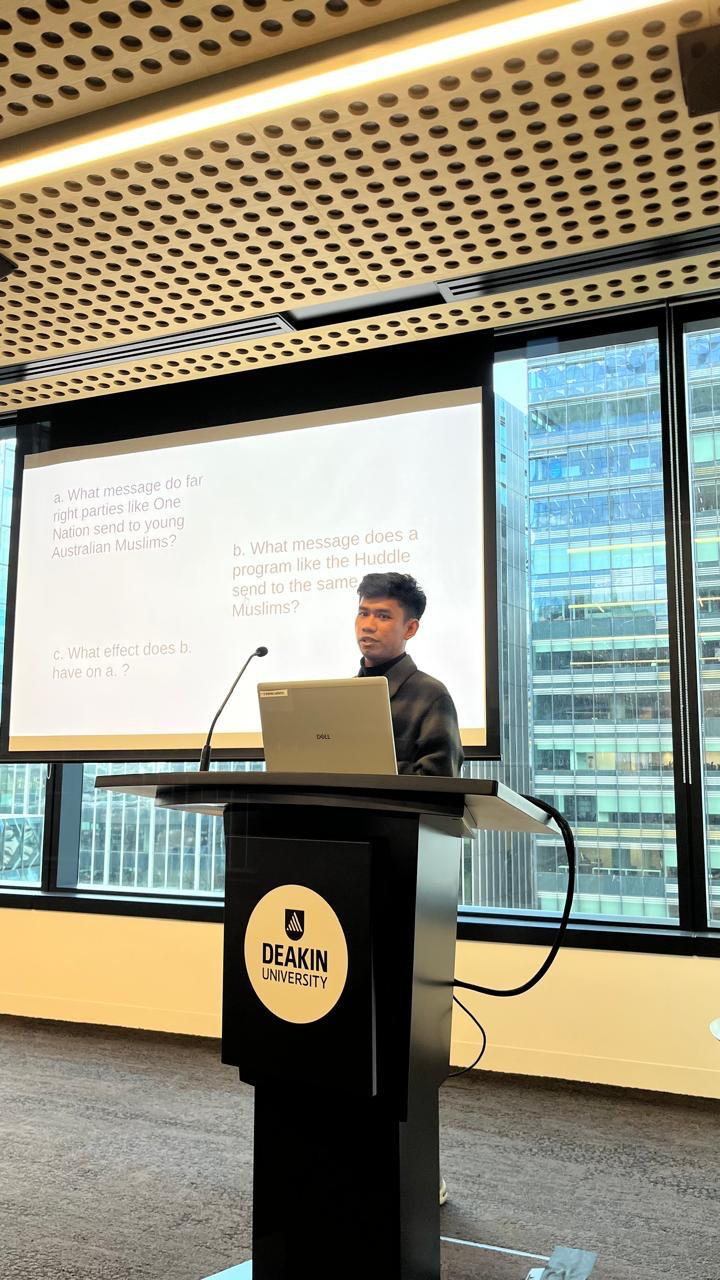
Basith hopes to strengthen his leadership, deepen his perspectives, and build connections that could lead to future collaborations. In particular, he is interested in developing a two-way documentary film that brings Indonesian and Australian values into dialogue, allowing audiences from both countries to learn from one another’s experiences. For him, the exchange is not simply about gaining international exposure. It is also an opportunity to transform ideas developed through research into creative projects with a wider social impact.
Nuzul, meanwhile, hopes to explore how Muslim communities in Australia navigate religious identity, multiculturalism, and contemporary social challenges. He is particularly interested in how Islamic traditions and educational practices travel across borders and become embedded in Muslim communities in different societies.
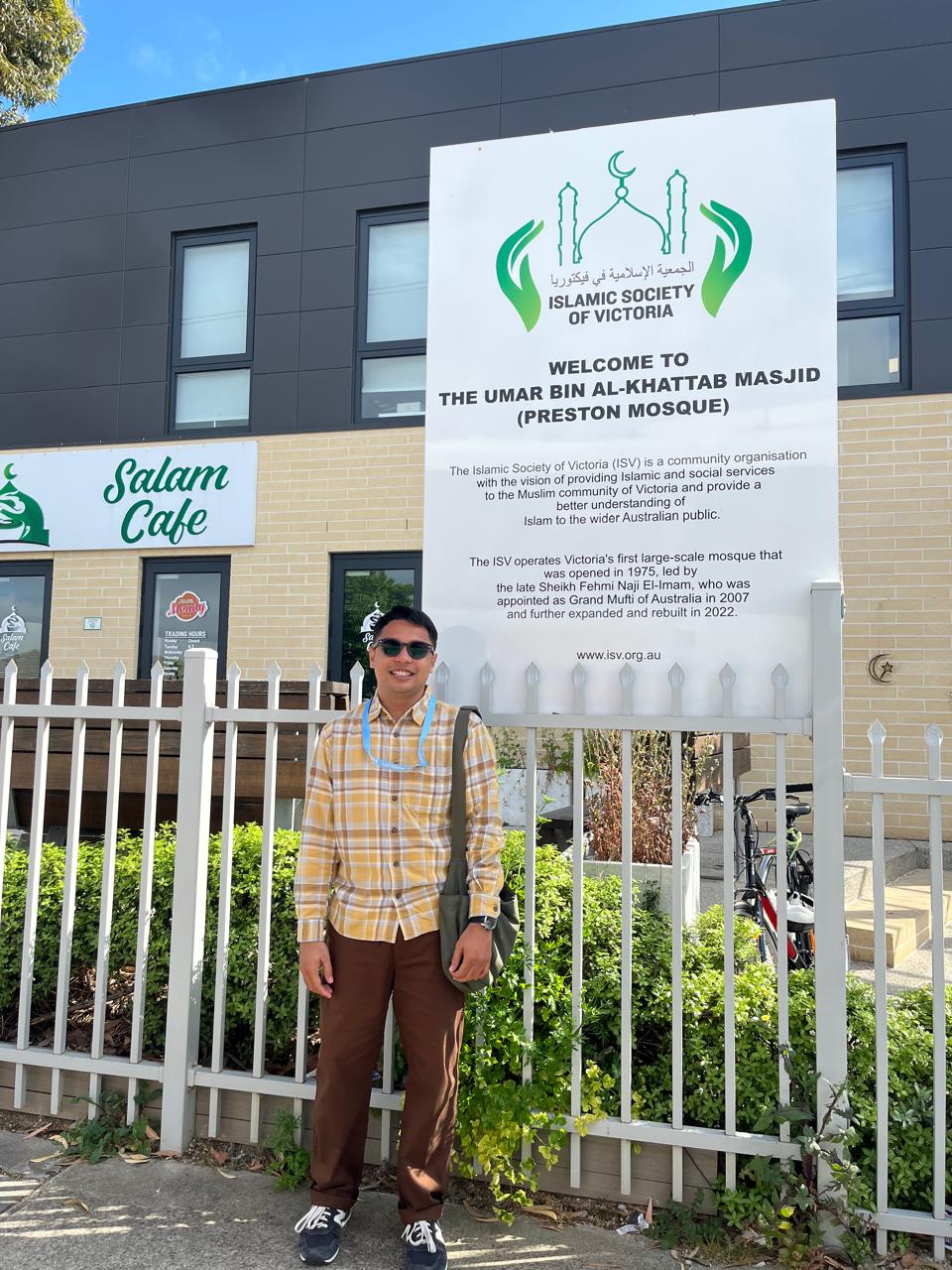
One question that captures his curiosity concerns the transmission of Islamic educational traditions. During a visit to Preston Mosque, also known as the Umar bin al-Khattab Mosque, he encountered an Iqra’ book by Indonesian Qur’anic educator K.H. As’ad Humam, a familiar learning resource for many Indonesian Muslims learning basic Qur’an reading.
Finding the book in an Australian mosque prompted him to reflect on how the method reached the local Muslim community, who introduced and taught it, and how it has been passed down through generations. The encounter also raised broader questions about migration, cultural exchange, and the contributions of Indonesian Muslims and other migrant communities to the development of Islam in Australia.
For Nuzul, such everyday observations demonstrate how meaningful learning can emerge from direct encounters with people, places, and practices. He hopes the program will help him understand these connections more deeply while exchanging perspectives with participants from diverse backgrounds.
The UIII Academic Experience as a Foundation
Both alumni identify their academic experiences at FIS UIII as an important foundation for participating in an international exchange program.
Basith describes his experience at UIII as integral to his academic and personal development. The university’s emphasis on critical thinking, flexibility, and leadership, he believes, has helped prepare him to engage with people from different backgrounds and navigate unfamiliar environments.
His studies encouraged him to consider how academic knowledge might be communicated through different media and applied beyond traditional scholarly settings. AIMEP therefore represents a continuation of that journey, offering an opportunity to develop his ideas through dialogue and collaboration.
For Nuzul, studying at FIS UIII broadened his understanding of Islam by encouraging him to examine religious traditions in their wider social, political, and cultural contexts. It also taught him the importance of engaging with different perspectives and remaining open to experiences that challenge his assumptions.
He believes that learning extends beyond the classroom through conversations, disagreements, and the willingness to listen to people whose experiences differ from one’s own.
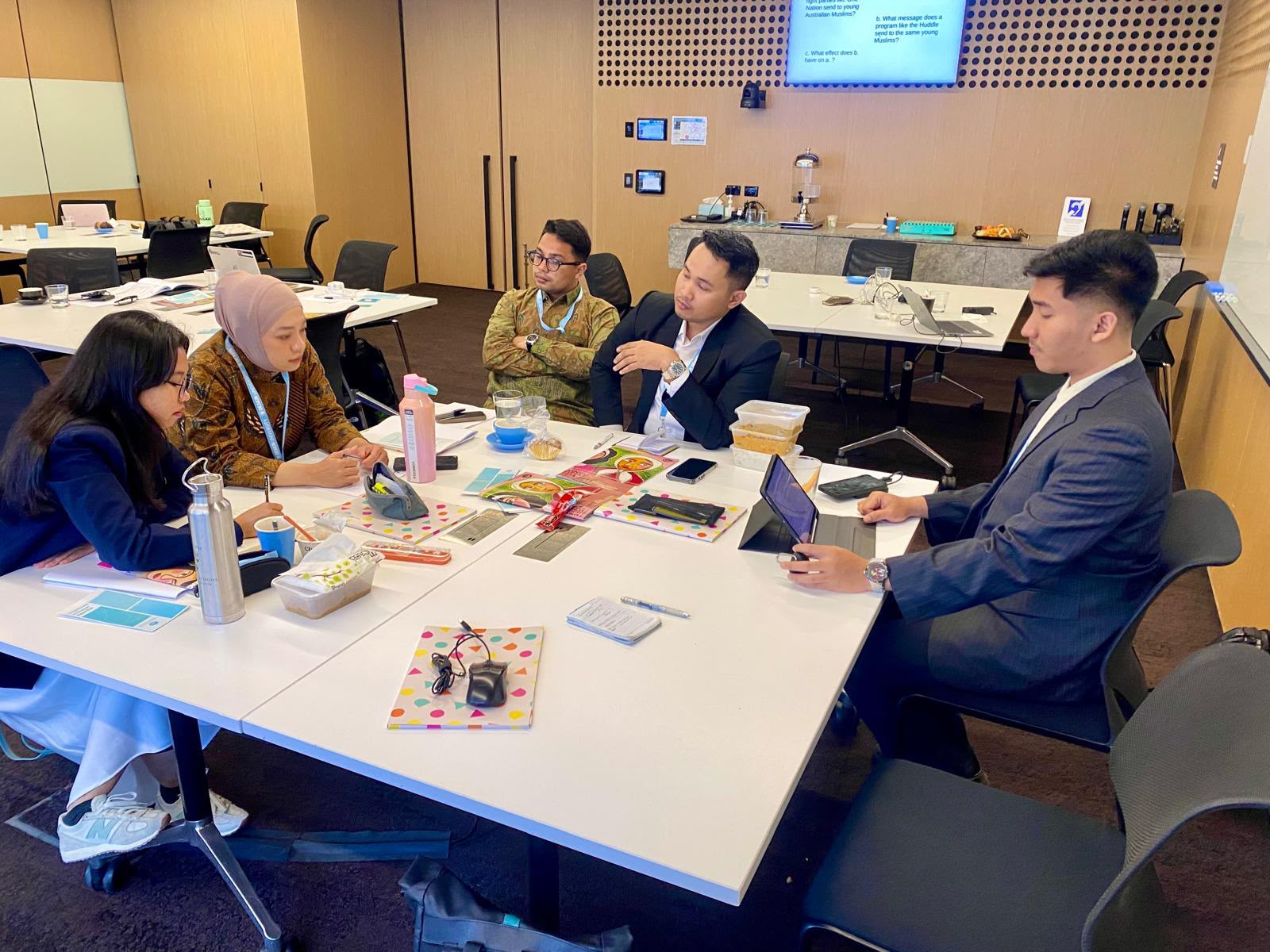
This perspective is particularly relevant to an exchange program that brings together participants from different communities and backgrounds. By engaging directly with Muslim communities in Australia, Nuzul hopes to deepen his understanding of how Islam is practised and understood across diverse social environments.
Beyond the Exchange
For both alumni, AIMEP represents more than an international learning opportunity. It is a chance to turn their academic and professional experiences into new forms of engagement and contribution.
Basith hopes to develop collaborative documentary projects that facilitate dialogue between Indonesia and Australia, while Nuzul aims to bring new insights into his work in refugee education and community advocacy.
Their participation also illustrates the diverse pathways available to FIS UIII graduates, whose academic training can inform work across creative industries, education, advocacy, and other areas of public life.
Through their respective journeys, Basith and Nuzul demonstrate how critical inquiry, openness to different perspectives, and a commitment to social engagement can help bridge academic knowledge and real-world challenges.
As they embark on this exchange, both look forward to learning from others, building meaningful relationships, and returning with perspectives that can inform their future work and contributions to society.