
Depok, Indonesia — The Faculty of Islamic Studies (FIS) at Universitas Islam Internasional Indonesia (UIII) proudly congratulates its research team for successfully securing the MoRA the AIR Funds 2026 through the research project entitled “Islam Indonesia di Ruang Digital: Kajian Komputasional atas Aktor, Wacana, dan Orientasi Keagamaan Publik”. The multi-year research project receives total funding of IDR 500 million and will examine the evolving landscape of Indonesian Islam in digital spaces through a computational and big data approach.
The research team consists of:
- Prof. Dr. Yanwar Pribadi
Universitas Islam Internasional Indonesia
Principal Investigator - Dr. Ade Jaya Suryani
Universitas Islam Negeri Sultan Maulana Hasanuddin Banten
Member - Bhirawa Anoraga, Ph.D
Universitas Islam Internasional Indonesia
Member - Dr. Ahmad Habibi Syahid
Universitas Islam Negeri Sultan Maulana Hasanuddin Banten
Member - Hasna Katsurayya, S.E., M.Ak
Universitas Islam Internasional Indonesia
Administrator
Through this research, the team aims to provide a more comprehensive understanding of Indonesian Islam in the digital era by utilizing big data analysis and computational methods. Unlike previous studies that have often focused on specific cases or limited communities, this research seeks to analyze large-scale digital traces to identify diverse religious orientations, public preferences, patterns of interaction, and emerging religious issues within Indonesia’s digital public sphere.
The use of computational approaches allows researchers to map broader dynamics of contemporary Islamic discourse, including how religious ideas circulate, how actors engage with digital platforms, and how different forms of religious expression develop within online environments.
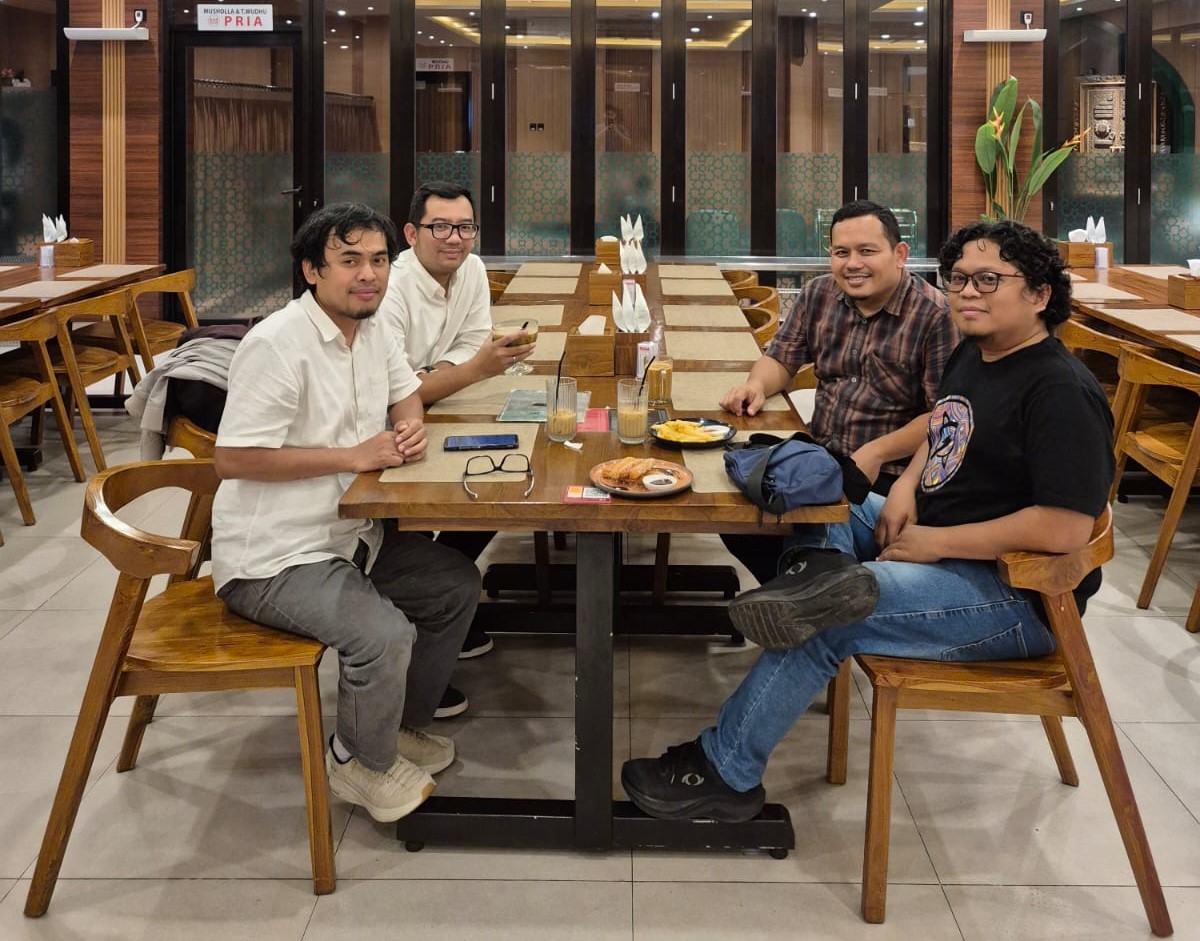
This research represents the continuation of FIS UIII’s longstanding commitment to the study of Digital Islam. Since 2022, FIS UIII has actively developed this field through the establishment of the Digital Islam concentration, the Digital Islam course, and the annual Masterclass in Digital Humanities. These initiatives reflect FIS UIII’s commitment to integrating Islamic studies with contemporary digital methodologies while maintaining critical engagement with social, cultural, and religious transformations in Muslim societies.
The collaboration with researchers from Universitas Islam Negeri Sultan Maulana Hasanuddin Banten (UIN Banten) further strengthens this initiative. Members of the UIN Banten team have contributed significantly to digital Islam studies, including through the establishment of the Digital Muslim Review, a scholarly journal focusing on research related to Muslim communities and digital transformations.
The MoRA the AIR Funds 2026 is a competitive research funding program organized by the Ministry of Religious Affairs of the Republic of Indonesia. The selection process was conducted through several stages, including registration, administrative evaluation, substantive assessment, interviews, and offering processes by reviewers. The process was managed through the eRISPRO application system and followed the technical guidelines established by the Ministry of Religious Affairs.
Based on the official decision of the Ministry of Religious Affairs, 131 research teams were selected as recipients of the 2026 research funding program, with a total allocation of IDR 71,851,855,600 across seven research themes. The determination of recipients was established through the Decree of the Secretary General of the Ministry of Religious Affairs Number 380 of 2026 concerning the Determination of Recipients of the Research Funding Program.
The Faculty of Islamic Studies UIII extends its highest appreciation and congratulations to the research team for this achievement. This recognition demonstrates the important role of interdisciplinary and digitally informed Islamic studies in understanding the transformation of Muslim societies in the contemporary era.
Through this research, FIS UIII continues to advance innovative scholarship that connects Islamic studies, social sciences, and digital humanities, contributing to a deeper understanding of Indonesia’s diverse religious landscape in the digital age.