
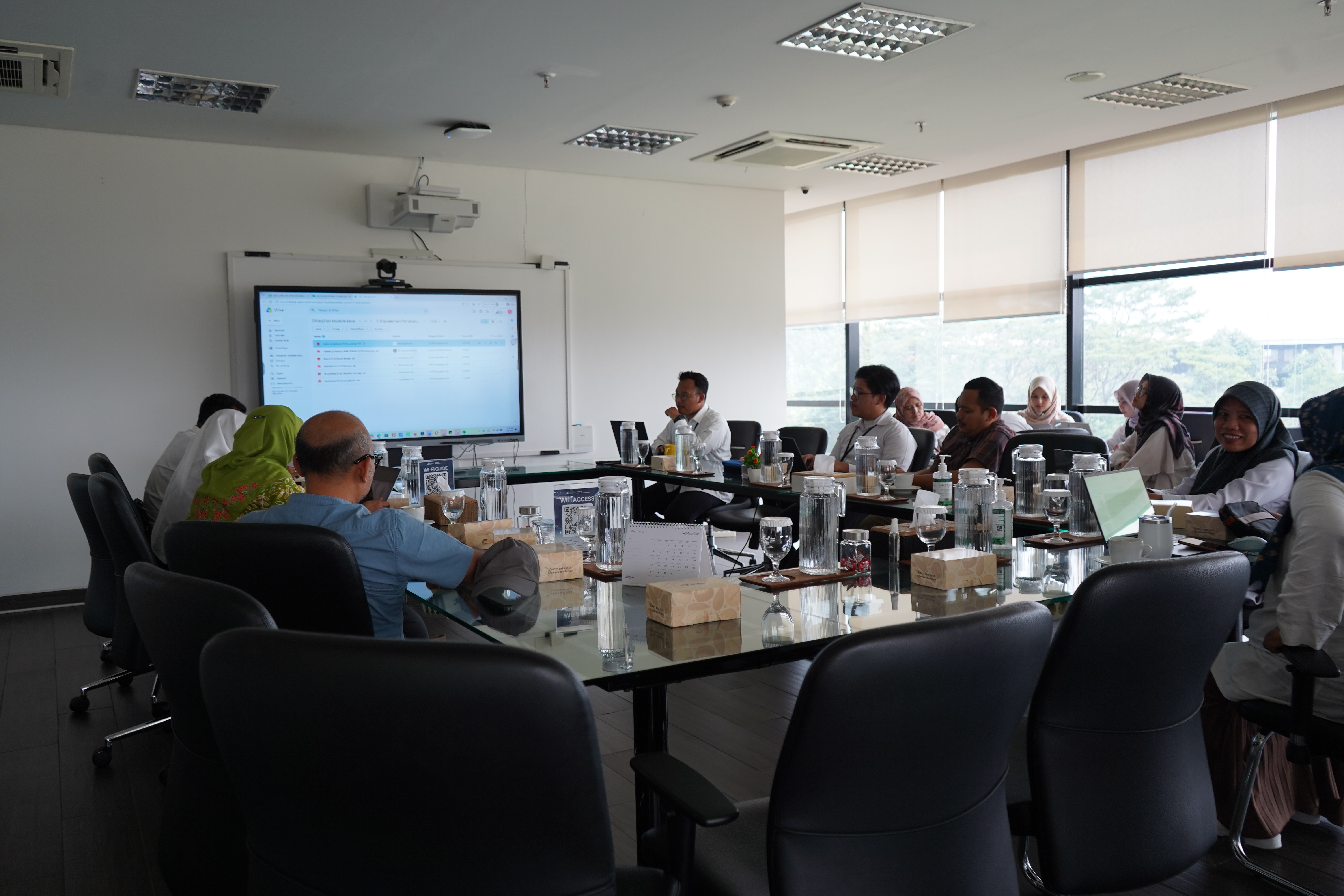
DEPOK — The Faculty of Islamic Studies, UIII, participated in a socialization session on Gratification Control and the strengthening of the Integrity Zone, organized by the Internal Supervisory Unit (SPI) of UIII on September 15, 2026.
The activity was held as part of UIII’s ongoing efforts to strengthen institutional governance, promote a culture of integrity, and support the implementation of the UIII Rector’s Regulation on Gratification Control within the university environment. The session also included a review of supporting evidence for the development of the Integrity Zone at the faculty level.
The session was led by Diana Fitri Dahli, S.T., Secretary of SPI UIII. In her remarks, Diana emphasized that the development of an Integrity Zone is a collective effort that requires the active involvement and cooperation of all members of the university community. She highlighted the importance of leadership in driving the process and fostering collaboration across all levels of the institution.
Representatives of the Faculty of Islamic Studies attended the session as part of the faculty’s commitment to supporting UIII’s efforts to strengthen integrity, accountability, and transparent governance. The participation of faculty representatives also provided an opportunity to deepen understanding of gratification control mechanisms and the requirements for fulfilling Integrity Zone indicators.
The session further served as a platform for reviewing the completeness and relevance of supporting documents related to the Integrity Zone. Through this process, the Faculty of Islamic Studies continues to strengthen its institutional practices and documentation in support of a transparent, accountable, and service-oriented academic environment.
The Faculty of Islamic Studies is committed to contributing actively to the development of an integrity-based institutional culture at UIII. The socialization is expected to further enhance awareness of gratification control and encourage the collective implementation of integrity values across the faculty community.