
The Faculty of Islamic Studies (FIS), Universitas Islam Internasional Indonesia (UIII), welcomed the new academic semester with a public lecture exploring the significant contributions and authority of women in Hadith scholarship and Islamic legal thought.
Held on Monday, 7 September 2026, at the Theater Room, Faculty A Building, UIII, the lecture featured two speakers, Dr. Jumana ElSamna and Dr. Maryam Qonitat, who discussed different dimensions of women’s participation in the transmission, preservation, and interpretation of Hadith.
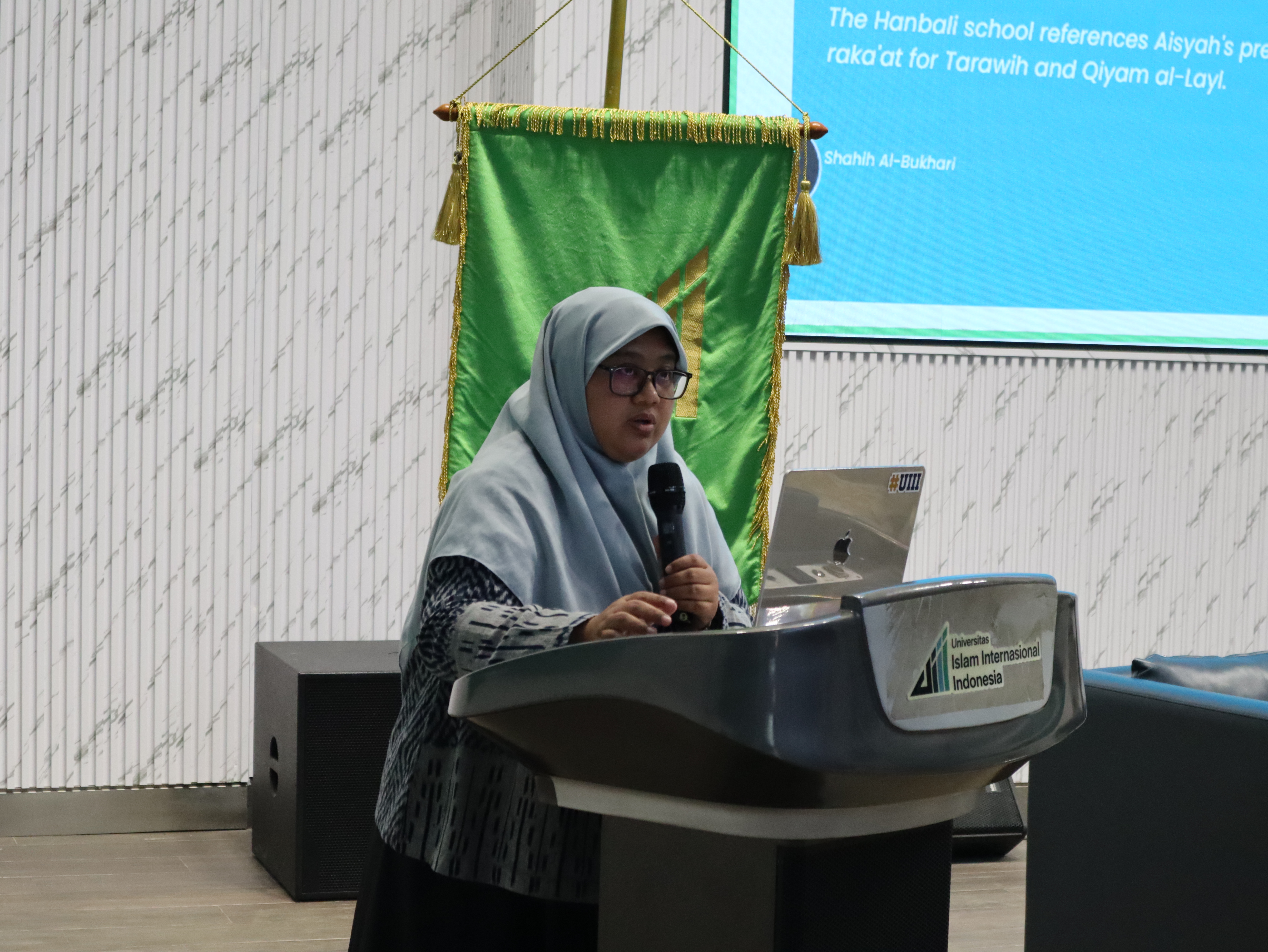
Dr. Qonitat presented “Muhaddithat: Hadith Authority in Legal Rulings,” examining the historical and normative foundations of women’s authority as Hadith narrators and scholars. Drawing on the work of Dr. Muhammad Akram Nadwi, particularly his extensive documentation of women scholars in Islamic intellectual history, the presentation highlighted the substantial presence of female Hadith scholars throughout the Muslim scholarly tradition.
The discussion emphasized that the acceptance of a Hadith narrator was determined by scholarly criteria rather than gender. Classical Hadith scholars applied established criteria for evaluating narrators, and women participated in the transmission of Hadith within this scholarly framework.
Among the prominent examples discussed was Aisha bint Abi Bakr, one of the most prolific Hadith narrators among the Companions and an important authority in Islamic jurisprudence. The lecture also highlighted other female Companions whose narrations contributed to the development of fundamental legal rulings, demonstrating the important role women played in shaping Islamic legal thought.
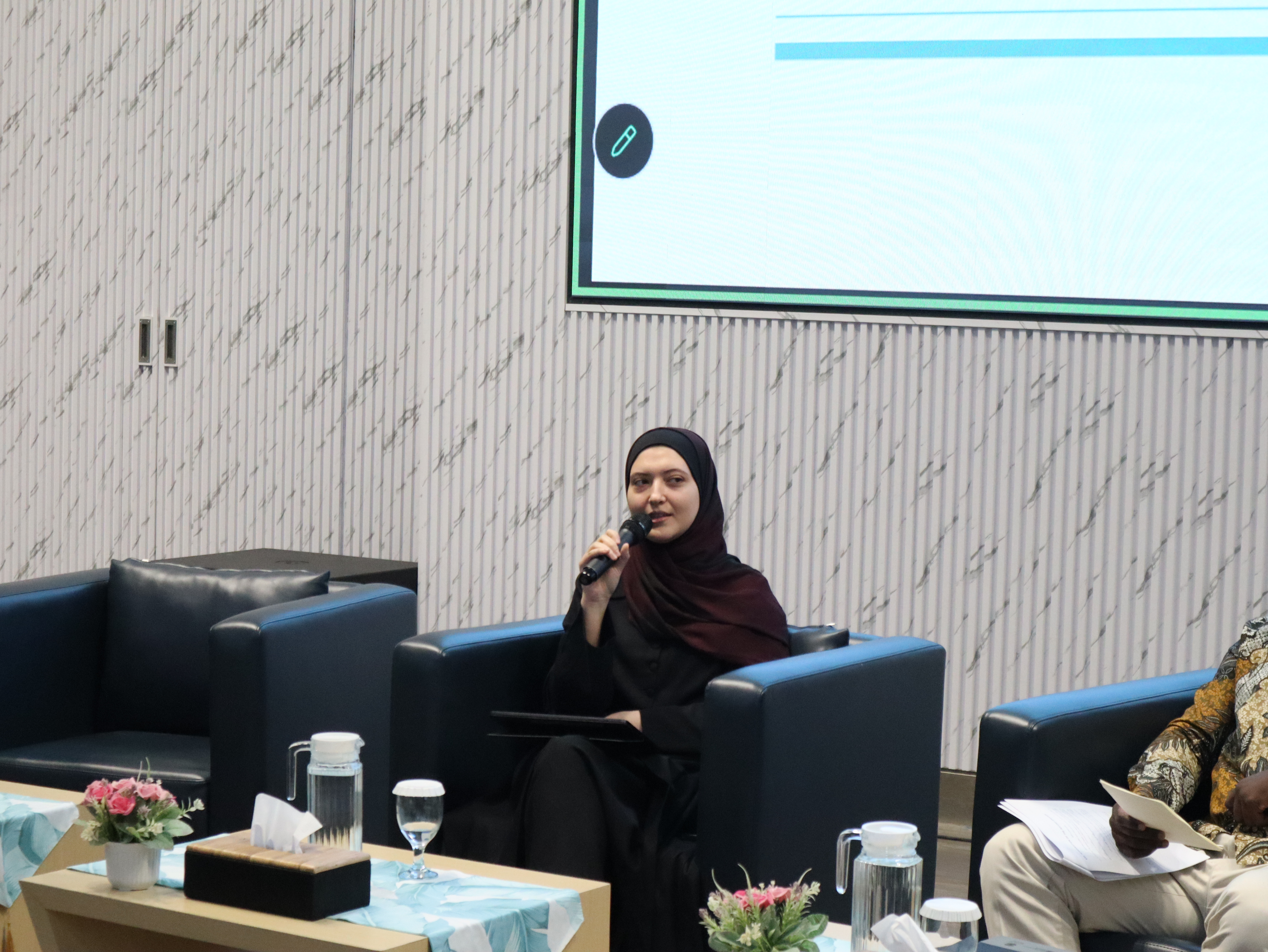
Dr. ElSamna, meanwhile, presented “حضور النساء في علم الرجال: في العصر المملوكي”, focusing on the presence of women in ‘ilm al-rijal and Hadith transmission during the Mamluk period.
Her presentation traced the changing circumstances of women’s participation in Hadith scholarship across different periods of Islamic history. While women had direct access to the Prophet and his Companions during the earliest period of Islam, the development of more complex systems of Hadith learning and the increasing importance of travel for acquiring knowledge presented new challenges to women’s participation during the Tabi‘in period.
The establishment and circulation of written Hadith collections in later centuries, however, created new opportunities for women to participate in scholarly networks. The Mamluk period was particularly significant, witnessing the development of educational institutions, libraries, and scholarly networks in which numerous women received and transmitted Hadith.
Dr. ElSamna highlighted several examples of female scholars who played active roles as teachers and transmitters. Among them were Maryam bint Ahmad al-Azra‘i, whose scholarly network was documented by Ibn Hajar, as well as Fatima bint Ali, who transmitted Sahih Muslim through a highly connected chain, and Karima bint Ahmad, who held regular Hadith sessions in Mecca.
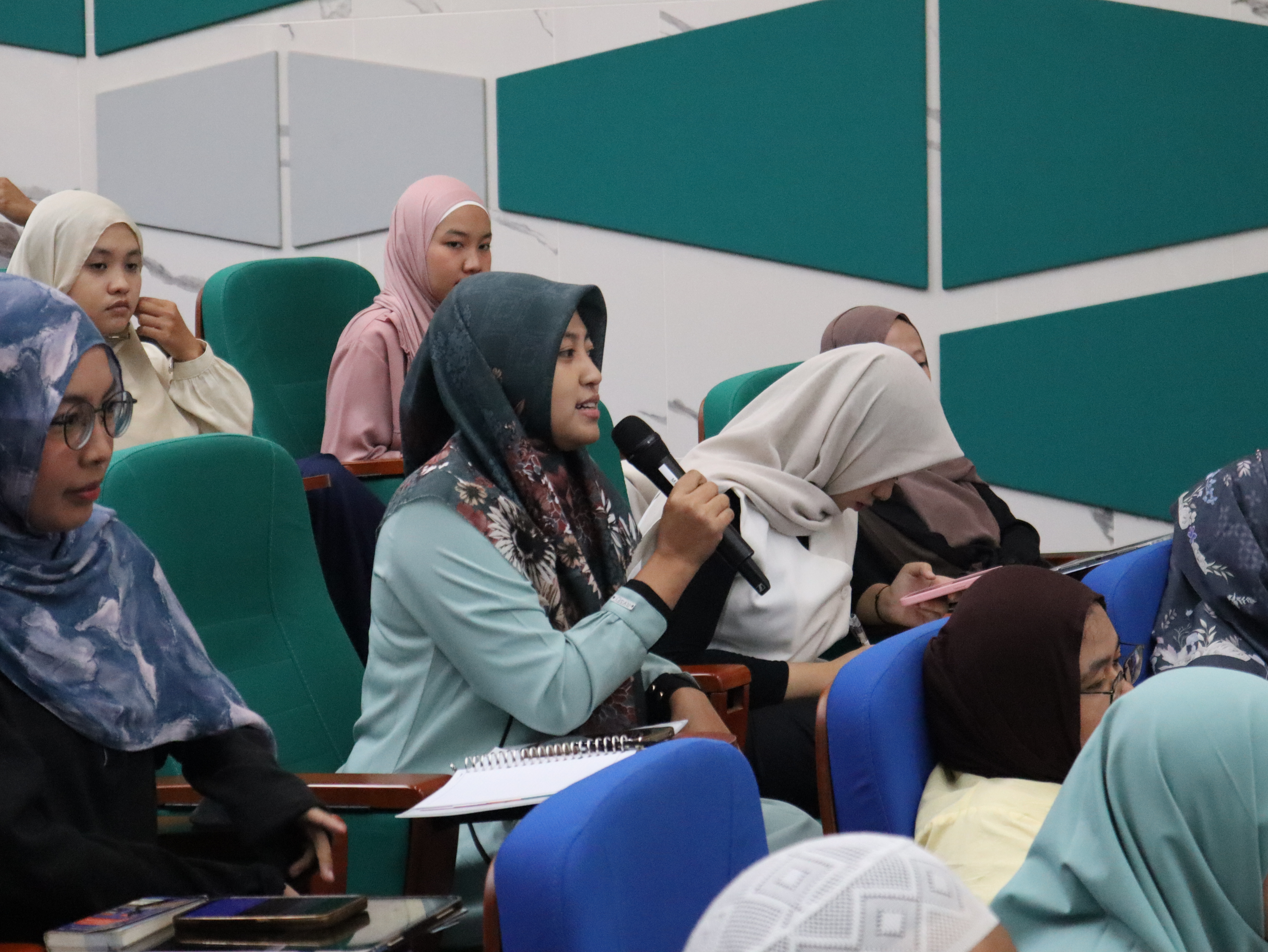
The lecture further explored contemporary approaches to studying women in Hadith scholarship. These include examining women as narrators and teachers, investigating their scholarly authority and leadership, and studying their contributions as interpreters and jurists. The speakers also noted the importance of revisiting historical narratives in which women’s intellectual contributions have sometimes been marginalized.
The discussion underscored the importance of continued research into women’s intellectual contributions and of bringing these contributions into broader conversations on Islamic scholarship.
The public lecture concluded with appreciation for both speakers and participants. As part of the follow-up to the discussion, the members of the FIS academic community were likewise encouraged to engage with Al-Muhaddithat and continue exploring the history of women’s contributions to Hadith scholarship.
Through this public lecture, FIS UIII reaffirmed its commitment to fostering critical academic discussions on Islamic intellectual history and to creating space for deeper scholarly engagement with the contributions of women to the Islamic tradition.