
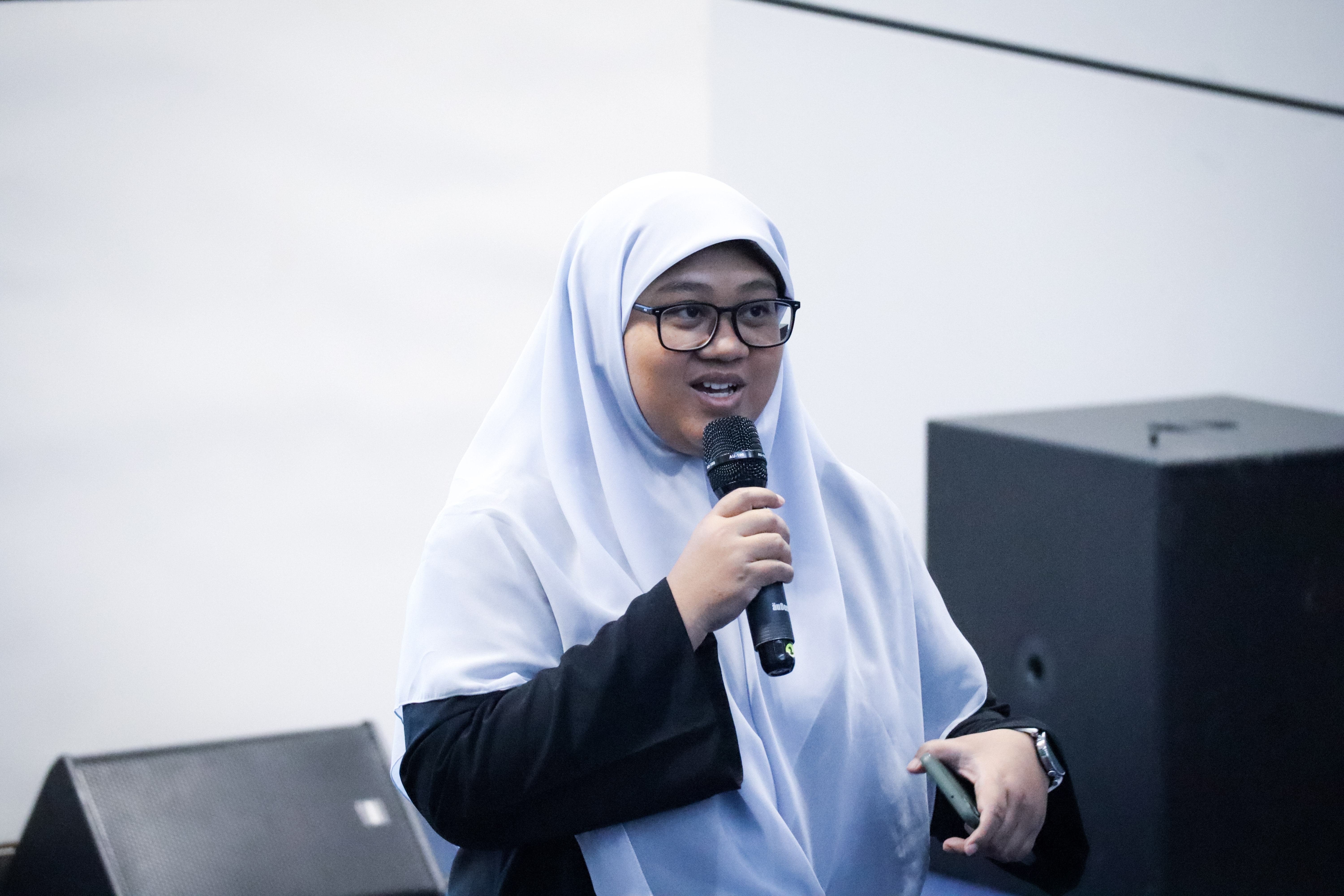
Depok — The Faculty of Islamic Studies (FIS) at UIII warmly welcomes Maryam Qonitat, Lc., M.IRKH., Ph.D., a scholar dedicated to bringing the depth of turath (classical heritage) into the modern classroom. Having completed her undergraduate studies at Al-Azhar University, Cairo, followed by an M.Irk and Ph.D. at the International Islamic University Malaysia (IIUM), Dr. Maryam is set to teach Tarikh Sunnah wa Manahij Muhaddisin this semester.
Why UIII? A Hub for International Islamic Values
Choosing UIII as her academic home was a deliberate decision rooted in the university’s unique vision. “UIII is the first international Islamic university in Indonesia that aims to produce high-quality graduates without detaching from Islamic values as the core of their thoughts and contributions,” Dr. Maryam notes.
She finds this promising because Islamic values are increasingly expected to provide solutions to global crises. Furthermore, the international environment encourages scholars to be globally adaptive—a setting she finds familiar and fitting, especially since the programs at FIS perfectly align with her academic background from S1 to S3.
Hadith as a Legal Foundation and Logical Verification Tool
For Dr. Maryam, the decision to specialize in Hadith studies was rooted in the principle that Hadith serves as the primary guidance for Muslims in legal rulings after the Qur’an. While many find the field daunting due to its complexity, she views it as a highly rational discipline.
“Hadith science is essentially the most rational and logical method for verifying sources of information—a crucial skill in today’s overwhelming information age,” she explains. Her research focuses on the intersection of Hadith, Women, and Family. She sees an urgent need to address misinterpretations of Hadith regarding women, which often lead to misunderstandings of Islamic teachings.
Relevancy and Character: Beyond the Academic Walls
Dr. Maryam describes her academic character in three words: Flexible, Disciplined, and Rooted in Islamic Turath. For her, the Qur’an and Sunnah are not just subjects to be studied in the ivory tower of academia but are guides for everyday life.
This commitment extends beyond the campus. To recharge her energy after dealing with heavy academic texts, she stays active in the community. “I enjoy leading Islamic studies for women, particularly in the fields of Tafsir and Hadith, and managing a non-formal Al-Qur’an education institution. And of course, spending quality time traveling with my family is essential for me,” she shares.
Global Challenges: Relevance Within the Framework of Faith
Dr. Maryam recognizes that globalization has significantly impacted Muslim family development and the demand for women’s contributions in the public sphere. Her mission is to re-contextualize Hadith texts for the contemporary era without deviating from established religious frameworks.
“Islam elevates the status of women and positions them at the core of family development without hindering their potential to contribute to the Ummah or requiring them to abandon their nature,” she adds.
Challenges and Teaching Style: From Discussion to Life Lessons
On a multicultural campus like UIII, Dr. Maryam anticipates her students’ diverse educational backgrounds of her students as her primary challenge. “The students will have varying levels of knowledge and prior education. This is certainly a challenge as well as a great responsibility for a lecturer,” she notes.
Regarding her pedagogy, she emphasizes student initiative at the postgraduate level. “At this stage, students should no longer be ‘fed’ like in undergraduate studies; instead, they must ‘feed’ themselves first. The class will become a space for discussion, drawing from the diverse knowledge of both students and the lecturer.”
Dr. Maryam also enjoys a personal touch in her teaching. “I like to talk with students about ibrah (life lessons) related to our topics. Religious knowledge is ultimately a provision for life, not just for fulfilling credits.” She describes herself as a disciplined yet flexible lecturer who enjoys a good balance of humor and academic rigor.
A Vision for Global Collaboration and Innovation
Dr. Maryam aims to build networks for Hadith studies with international institutions from both the East and the West. Furthermore, she hopes to realize a “dream project”: a digital visualization of Rijalul Hadith. This project would map the intellectual journeys of great scholars like Imam Bukhari, including their teachers and students, making the complex chains of narration easier for students to understand through technology.
A Message for Students
Concluding her introduction, Dr. Maryam shares an important message for FIS UIII students:
“Purify your intentions—study for the sake of Allah, not for prestige. Be diligent, avoid sectarian fanaticism (ta’assub), respect the opinions of others, and maintain etiquette toward your lecturers. And one more thing, don’t be late in submitting your assignments either. Bismillah lillah.”