
Despite the accelerating pace of the modern era, marked by digitalization and shifting scholarly priorities, interest in classical Islamic scholarship remains vibrant. For Hasan Rusdi, an alumnus of the MA in Islamic Studies specializing in Classical Islam at the Faculty of Islamic Studies, Universitas Islam Internasional Indonesia (UIII), this intellectual curiosity has taken the form of a concrete initiative to preserve and revive the scholarly heritage of Nusantara’s ulama, particularly those from Kalimantan. Driven by a deep fascination with the intellectual legacy of earlier scholars preserved in classical manuscripts, Hasan and his colleagues initiated a project dedicated to safeguarding Banjar Islamic manuscripts. At its core lies the conviction that these manuscripts are not merely relics of the past but vital sources of knowledge for both present and future generations.
From a Grassroots Movement to a Formal Institution
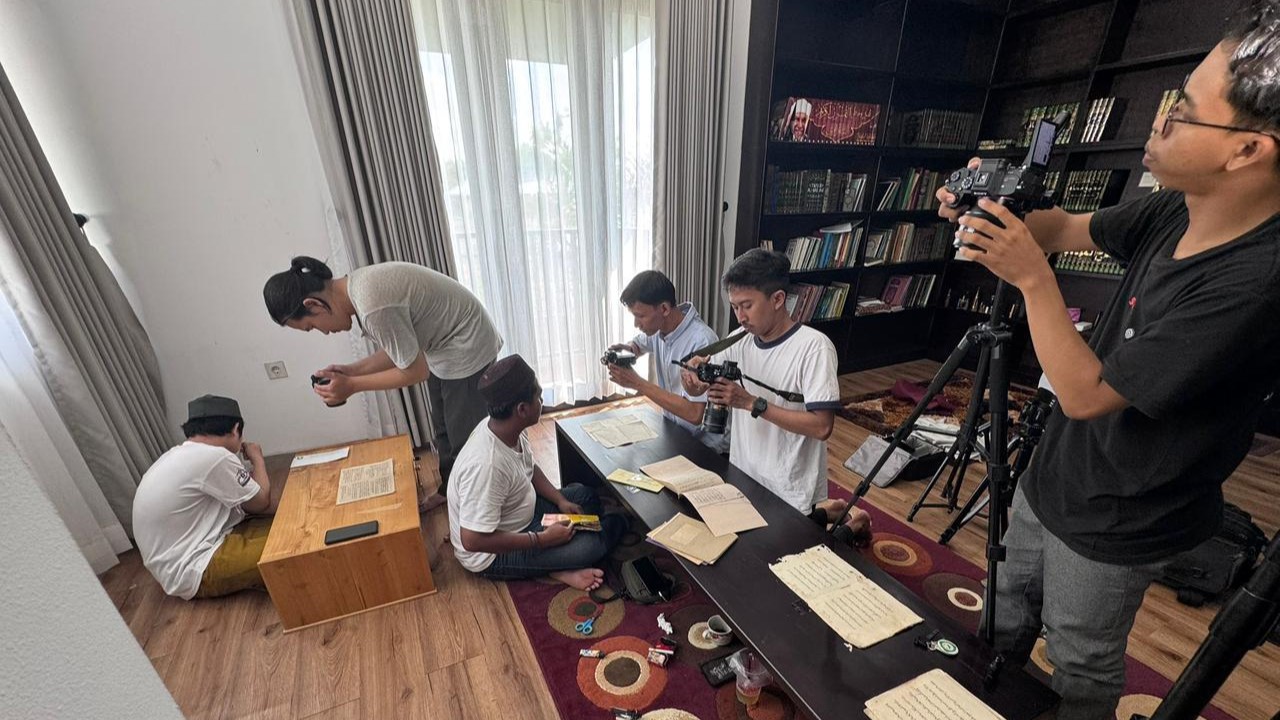
The origins of Beit At-Turāth Al-Islāmī Kalimantan can be traced to nearly a year of quiet yet consistent efforts. During this period, the team successfully digitized approximately 100 manuscripts, conducted basic preservation work, and initiated preliminary scholarly studies. These efforts soon attracted moral support and encouragement from prominent religious scholars.
In a warm meeting with Habib Ahmad bin Nouval bin Jindan, Head of the Al-Hawthah Al Jindaniah Foundation, Hasan shared the journey and achievements of the initiative. This discussion led to a strong recommendation to formalize the movement as an institution. Thus, Beit At-Turāth Al-Islāmī Kalimantan was established with a clear vision: to serve as a center for preserving the scholarly, cultural, and civilizational heritage of Kalimantan. Habib Ahmad expressed his commitment to accompanying the institution as a special advisor. With a strong spirit of Khidmah and a long-term orientation, Beit At-Turāth Al-Islāmī Kalimantan was officially established as a community-based heritage institution.
The Role of a UIII Alumnus in Turāth Manuscript Research
As the Founder and Coordinator of Research on Turāth Manuscript, Hasan Rusdi emphasizes that manuscript preservation offers two major benefits. Theoretically, it contributes to the advancement of academic scholarship in Islamic manuscript and turāth studies, particularly for researchers and students. Practically, it enables the wider public to become more familiar with influential Banjari’s ulama and to reinterpret the substance of their thought, considering contemporary challenges.
Currently, beyond collecting and digitizing manuscripts, Beit At-Turāth Al-Islāmī Kalimantan is undertaking a taḥqīq project of a manuscript by a prominent Banjari’s ulama, entitled “SharḥAsmā’ al-Ḥusnā”. This project represents a significant step in reintroducing local scholarly works into the broader academic discourse.
Challenges in the Field
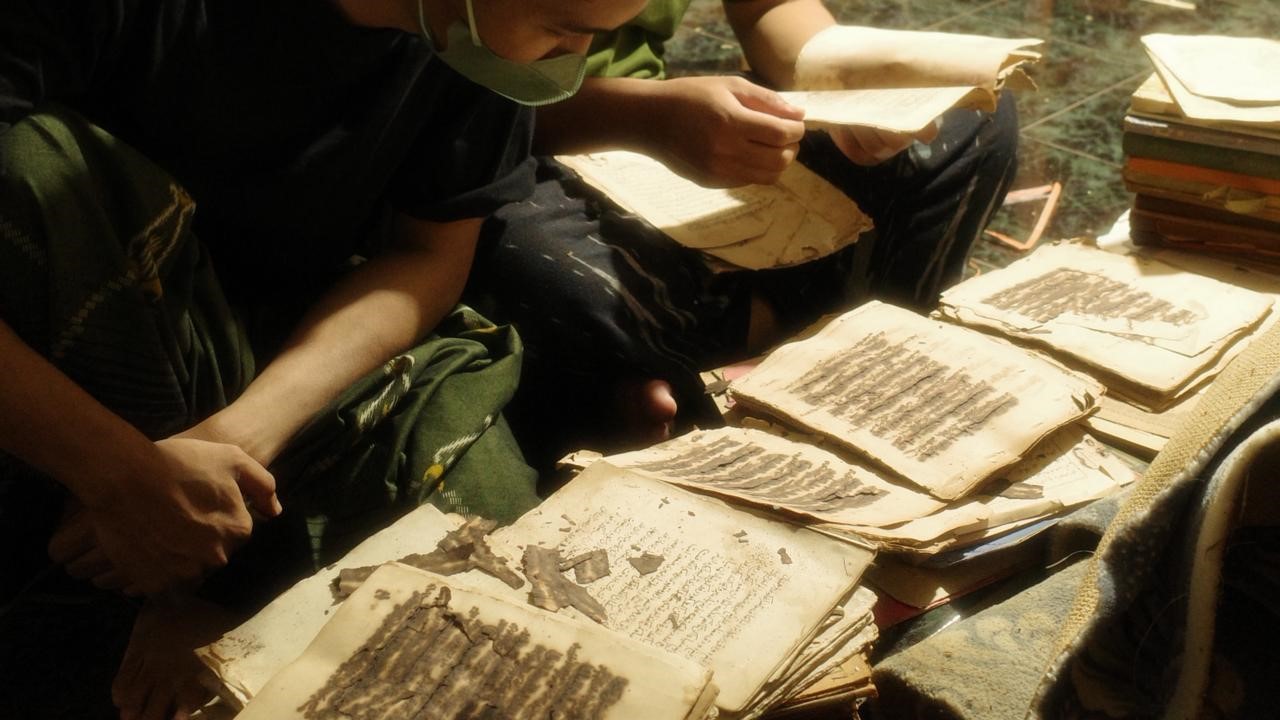
Manuscript preservation presents its own challenges. One major obstacle lies in persuading heirs to allow the digitization of manuscripts, which are still regarded as private family heirlooms. Another difficulty concerns the physical deterioration of manuscripts, which often complicates the identification of authorship and provenance.
From a linguistic and philological perspective, the manuscripts are also highly diverse, ranging from texts written entirely in Arabic script to those using a combination of Jawi and Arabic scripts, as well as manuscripts written entirely in Malay using the Jawi script.
Turāth Is Never Obsolete
Concluding the interview, Hasan shared a reflective message for students of Islamic manuscript studies and young scholars:
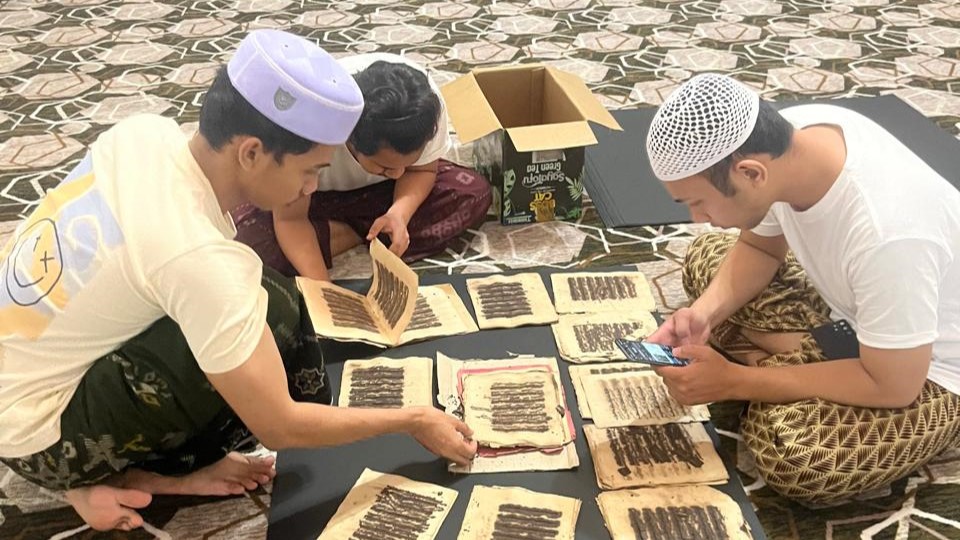
“Interest in manuscript studies remains relatively low among Indonesian academics. Yet there is so much beneath the surface that we still need to explore. This heritage is something we should be proud of, but more importantly, something we must apply and contribute back to society. Turāth does not mean obsolete. What is considered outdated will not remain so if we are willing to preserve it and bring it meaningfully into society, even to the global stage.”
Hasan’s journey demonstrates how classical Islamic studies cultivated at the Faculty of Islamic Studies, UIII can evolve into impactful socio-intellectual initiatives. Through Beit At-Turāth Al-Islāmī Kalimantan, the legacy of the ulama is not merely preserved but actively revived as a source of inspiration and knowledge for the present and the future.